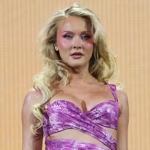


Olivia Rodrigo’s first two albums, Sour and Guts, took her to the top with quick-witted pop-punk songs about teen drama, played for laughs, and ballads about break-ups, not overplayed for tears. Amid the fizz of her rise, and a backdrop of corporate muscle — first Disney, where she was a child actor, then the world’s biggest label, Universal — a lot of effort has gone into presenting her as a Proper Musician, writing her own material, not dancing to other people’s tunes. Her third album tests the validity of the message. You Seem Pretty Sad for a Girl So in Love’s title is elaborately metaphysical compared with its monosyllabic predecessors. Its advance singles have been hits, although they haven’t yet matched the immense commercial success of her previous chart-toppers. The album reunites the 23-year-old with her regular producer and co-songwriter Daniel Nigro, but also marks a shift in register. It’s designed less with singles in mind than as a coherent collection of tracks, each linking with the other. It begins with Rodrigo with a boyfriend in a bar that closes at 11pm, a Cinderella whose midnight deadline is about to be truncated by London’s fusty licensing laws. (The location is clear from the Anglophile singer’s relationship with English actor Louis Partridge, now terminated, which provides the album with its gossipy real-life ballast.) The song, “Drop Dead”, is a surging number about meeting The One, effervescent but with a greater sense of consequence than the scenarios of previous records. “Stupid Song” moves the action to New York. The tempo speeds up as Rodrigo sings about a love so overwhelming that no song can capture it; a self-deprecating feint amid well-designed changes in musical pace and emphasis. “Honeybee” is a piano ballad with a winsome sense of lovestruck melancholy, at once pretty and sad as per the album’s title. “Maggots for Brains” finds her pining for her absent lover amid glumly chiming guitars borrowed from 1980s UK independent rock.
The album is neatly threaded by these post-punk and new wave touches, a step forward from the pop-punk of before. The Cure’s Robert Smith — who formed an odd-couple friendship with the Gen Z superstar after guesting during her Glastonbury headline set in 2025 — turns up as tutelary spirit on “What’s Wrong with Me”. His voice lightly shadows Rodrigo as she sings about “spiralling” after a break-up. The synthesis between elder statesman of gothic rock and former Disney star is a pleasing token of pop music’s essential unpredictability. True love is sundered in the acoustic ballads that dominate the back half of the 13 tracks. They’re restrained and tasteful. Like sex, emotional melodrama is largely absent from Rodrigo’s version of romance. (A recent kerfuffle about her grunge-inspired baby-doll outfits entirely misses the point of her wholesome appeal.) “Expectations” erupts into this slightly sedate section of the album with new wave drolleries about dating, as if expressing an anxiety that an energy boost is needed. It’s a fun song, performed with an actorly repertoire of asides and winks, but a mis-step in terms of sequencing — the only one in a well conceived and executed album, indubitably the work of a proper musician.