
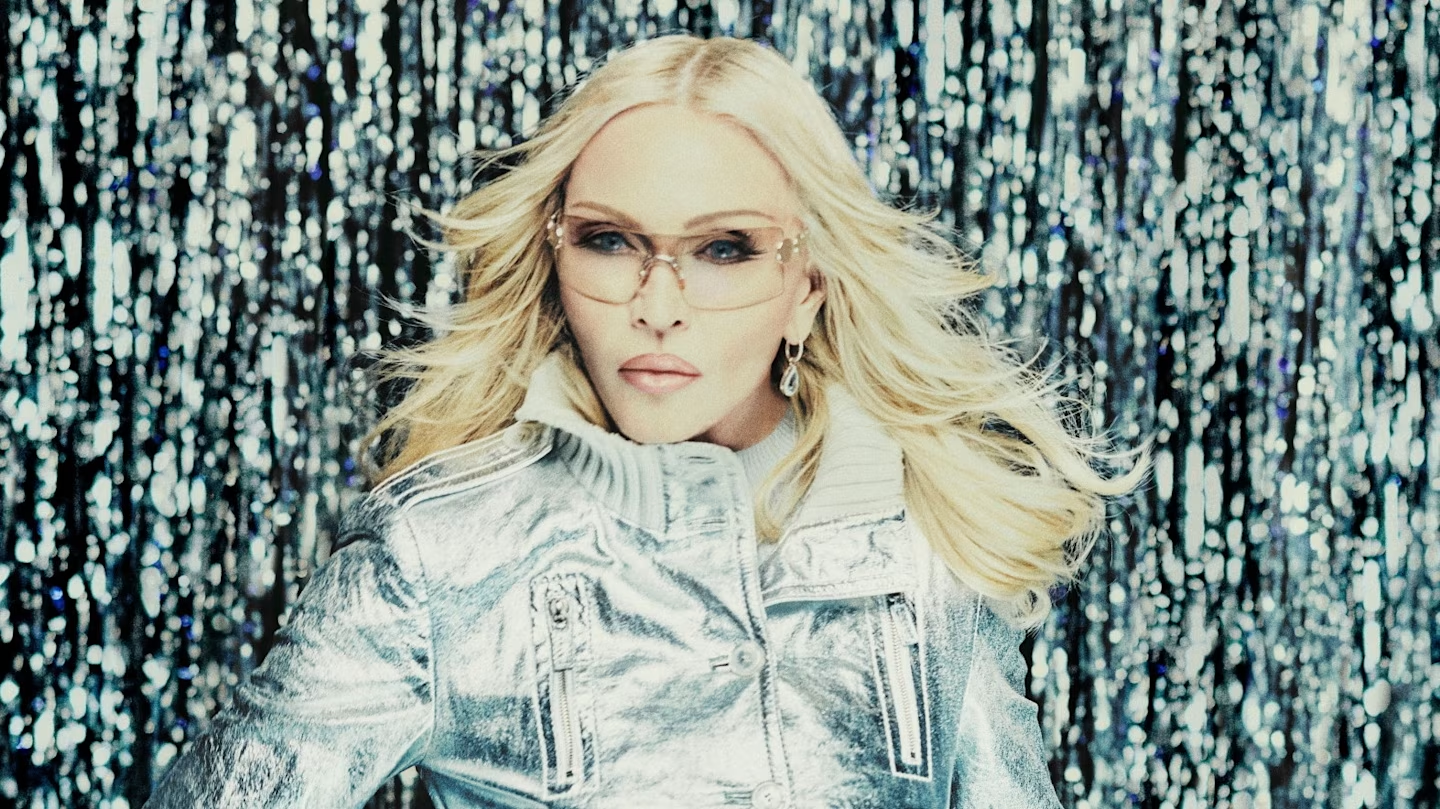
Featuring Sabrina Carpenter and daughter Lourdes Leon, the album is blended like a DJ set but shifts towards the personal
Madonna has already released a sequel of sorts to Confessions on a Dance Floor. It was MDNA, the 2012 album in which she embraced the synthetic highs and all too real lows of EDM, the bludgeoning mainstream sound of US rave culture. Its tour began with her arriving on stage in a confessional booth with the words, “I want so badly to be good”. MDNA wasn’t good: it fell from the charts like the damned on the day of judgment. Co-producer William Orbit, who had helmed her masterpiece Ray of Light, later implied the singer was too involved in other commitments. He has since disappeared from her professional life. For Confessions II, the singer has instead reunited with Stuart Price, another British producer with a significant role in her career. He worked on Confessions on a Dance Floor, which came out in 2005, the last of her classic albums. Like its forerunner, Confessions II’s 16 songs are blended in the manner of a DJ set. Nothing matches the heights of “Hung Up”, the Abba-sampling standout from the first Confessions, although “Danceteria” comes close, with a brilliantly imagined tribute to the New York club scene from which Madonna emerged in the 1980s. (It’s one of the tracks in the enjoyably garish short film accompanying the album, with cameos from a louche-looking Kate Moss, Cole Palmer at a urinal, Benedict Cumberbatch gamely bopping and a troupe of dancers shooting lasers from, of course, their nether regions.) “Danceteria” appears in the first section of the album amid a flow of tracks built around the peaks and drops of house and techno. Madonna brings a range of vocal styles to this dancefloor-oriented design, from “Vogue”-style declamations to staccato sung melodies in her thin, iconic voice. Songcraft suffers in “Good for the Soul”, a formulaic affair with portentous perfume-ad whispering about consciousness and time. But there’s an overall sense of purpose that has been absent from her music since 2005.
Sabrina Carpenter pays court to the queen of pop by playing second fiddle on “Bring Your Love”. Colombian singer Feid guests on “Read My Lips”, a well-worked exercise in Latin pop. We fear an outbreak of superstar indulgence when the singer’s daughter Lourdes Leon turns up for “The Test”. However, the results are sharpened by snappy UK garage and a confessional apology by Madonna for parental mistakes. The last section of the album shifts towards this more personal tone. “Fragile” is a ballad about her deceased brother, Christopher Ciccone, with a restrained drum-and-bass backdrop. “Betrayal”, co-produced by a longstanding French collaborator, Mirwais, is catchy trip-hop ingeniously threaded with an Erik Satie sample during which Madonna exorcises the memory of an ex. With Confessions II, pop’s most illustrious lapsed Catholic has rediscovered how to be good.
Madonna has already released a sequel of sorts to Confessions on a Dance Floor. It was MDNA, the 2012 album in which she embraced the synthetic highs and all too real lows of EDM, the bludgeoning mainstream sound of US rave culture. Its tour began with her arriving on stage in a confessional booth with the words, “I want so badly to be good”. MDNA wasn’t good: it fell from the charts like the damned on the day of judgment. Co-producer William Orbit, who had helmed her masterpiece Ray of Light, later implied the singer was too involved in other commitments. He has since disappeared from her professional life. For Confessions II, the singer has instead reunited with Stuart Price, another British producer with a significant role in her career. He worked on Confessions on a Dance Floor, which came out in 2005, the last of her classic albums. Like its forerunner, Confessions II’s 16 songs are blended in the manner of a DJ set. Nothing matches the heights of “Hung Up”, the Abba-sampling standout from the first Confessions, although “Danceteria” comes close, with a brilliantly imagined tribute to the New York club scene from which Madonna emerged in the 1980s. (It’s one of the tracks in the enjoyably garish short film accompanying the album, with cameos from a louche-looking Kate Moss, Cole Palmer at a urinal, Benedict Cumberbatch gamely bopping and a troupe of dancers shooting lasers from, of course, their nether regions.) “Danceteria” appears in the first section of the album amid a flow of tracks built around the peaks and drops of house and techno. Madonna brings a range of vocal styles to this dancefloor-oriented design, from “Vogue”-style declamations to staccato sung melodies in her thin, iconic voice. Songcraft suffers in “Good for the Soul”, a formulaic affair with portentous perfume-ad whispering about consciousness and time. But there’s an overall sense of purpose that has been absent from her music since 2005.
Sabrina Carpenter pays court to the queen of pop by playing second fiddle on “Bring Your Love”. Colombian singer Feid guests on “Read My Lips”, a well-worked exercise in Latin pop. We fear an outbreak of superstar indulgence when the singer’s daughter Lourdes Leon turns up for “The Test”. However, the results are sharpened by snappy UK garage and a confessional apology by Madonna for parental mistakes. The last section of the album shifts towards this more personal tone. “Fragile” is a ballad about her deceased brother, Christopher Ciccone, with a restrained drum-and-bass backdrop. “Betrayal”, co-produced by a longstanding French collaborator, Mirwais, is catchy trip-hop ingeniously threaded with an Erik Satie sample during which Madonna exorcises the memory of an ex. With Confessions II, pop’s most illustrious lapsed Catholic has rediscovered how to be good.
‘Confessions II’ is released by Warner Records on July 3