
His album “Bully” debuted at No. 2 on the Billboard charts, and celebrity guests Travis Scott, CeeLo Green and Lauryn Hill appeared with him during two sold-out shows in Los Angeles.
It seemed for a while that Ye might be a permanent pariah.
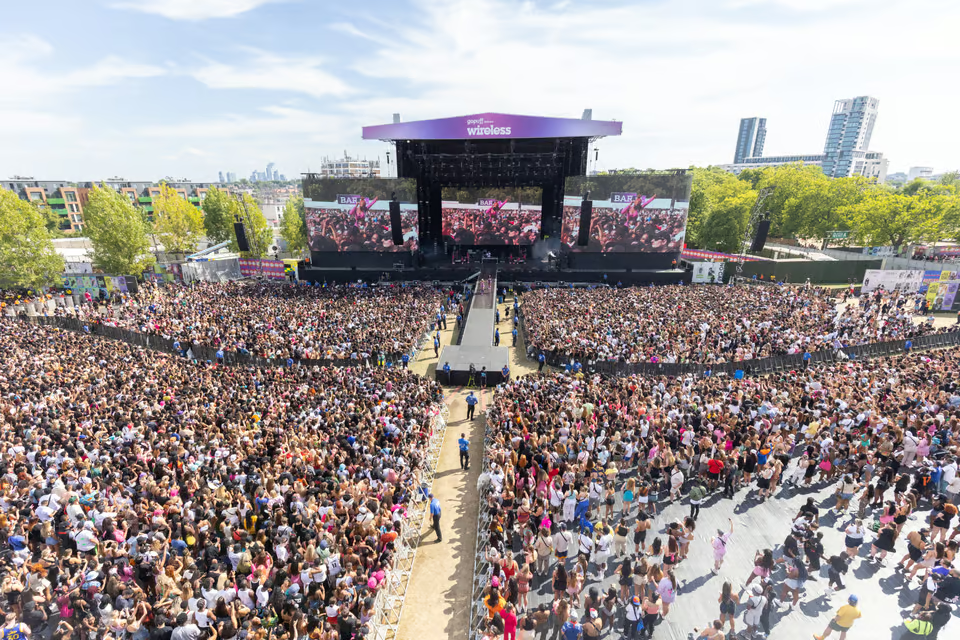
Though his statements cost him a number of business partnerships and reportedly cost him his billionaire status, Ye has continued to be one of the most popular rappers across streaming platforms, and as the SoFi Stadium concerts showed, he remains an in-demand performer. He was scheduled to perform at a festival in London this summer, but the backlash reached such a pitch that the United Kingdom’s Home Office announced on Tuesday that it would block him from traveling to the country. A spokesperson for the Home Office said in a statement, “His presence in the U.K. would not be conducive to the public good,” and the festival itself was canceled.
But if he is still able to make tens of millions of dollars for a couple shows, will that matter? The Los Angeles concerts proved people, including his industry peers, are still willing to show up for and stand with Ye.
It’s reminiscent of how many artists were still eager to work with R. Kelly, even after the allegations of abuse of girls surfaced in 2002 (indeed, even before then, when he secretly married teenager Aaliyah). Their morality has been tainted by their pursuit of popularity and profits, and with no social or financial pressure to stop them. Even someone like Hill, known for her social consciousness, has not dropped her association with Ye. In past cases, some Black people defending Black male celebrities have twisted themselves into the belief they are rehabilitating the image of a Black man who has been unfairly tried in the court of public opinion, no matter who that Black man has harmed or how publicly they’ve committed that harm. ( One would hope they would find it in themselves and their own sense of what is right to demand more of their peers, but thus far, few have taken up the cause.
In January, Ye took out a full-page ad in The Wall Street Journal to blame his behavior on untreated bipolar I disorder and brain damage he linked to his infamous car accident when he was on the precipice of fame almost 24 years ago.
“I’m not asking for sympathy, or a free pass, though I aspire to earn your forgiveness,” he wrote. “I write today simply to ask for your patience and understanding as I find my way home.”
These words could be a good start, if there were any reason to believe Ye was being sincere. But his issuing an apology in the run up to new music and a tour makes it feel like it was coming from someone more concerned with ticket sales than contrition. Even if his apology were sincere, let’s acknowledge that there’s a big difference between the questions, “Should a person who has caused harm with their words or actions be given the opportunity to apologize, make amends, and redeem themselves?” and, “Should a person who has caused harm with their words or actions be given the opportunity to make millions of dollars?”
Ye has been here before, after saying and doing things that hurt and antagonized the very people he claims to make music for.
“When you hear about slavery for 400 years … For 400 years? That sounds like a choice,” he said.
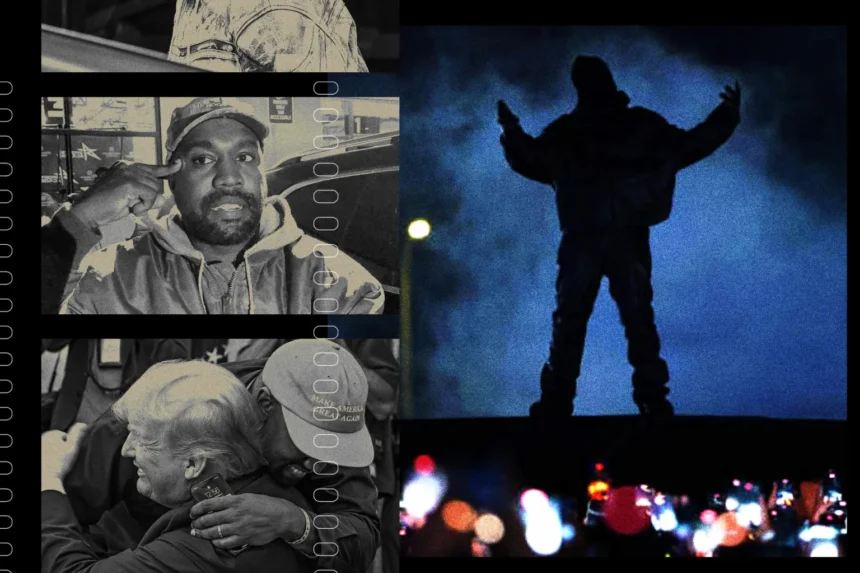
He went to the White House to profess his love for President Donald Trump and the red MAGA hat (“It was something about when I put this hat on, it made me feel like Superman. You made a Superman. That’s my favorite superhero. You made a Superman cape for me.”) In August 2018, , two months after he released the album “Ye,” he told a radio station in his hometown of Chicago, “ I’m sorry for the one-two effect of the MAGA hat into the slave comment.”
But not even that accounts for all his offensiveness. He sold Confederate flag merchandise while touring his album “Yeezus.” In short, he has made it hard for many people to be a fan of his.
And yet, there are people out there willing to look past all these things and readily embrace the next thing he does. He’s not unique in that respect. As Ye makes his return to the stage, Netflix is welcoming back Louis C.K., the once well-respected comedian who admitted to repeatedly masturbating in front of women in the comedy industry.
Nothing approaching accountability has been asked of these men. They are just moving on.
Then again, it feels strange demanding accountability for a rapper and a comic when the president of the United States was found liable of sexual abuse.
Demanding little in the way of contrition has landed us in a place where it no longer matters what harm people have caused — they can always find their way back to more wealth, more power. If people are not even willing to forgo streaming an artist who has promoted and fostered hate before he has done anything substantial to make it right, we will keep on this road until truly no act will be beyond the pale.