
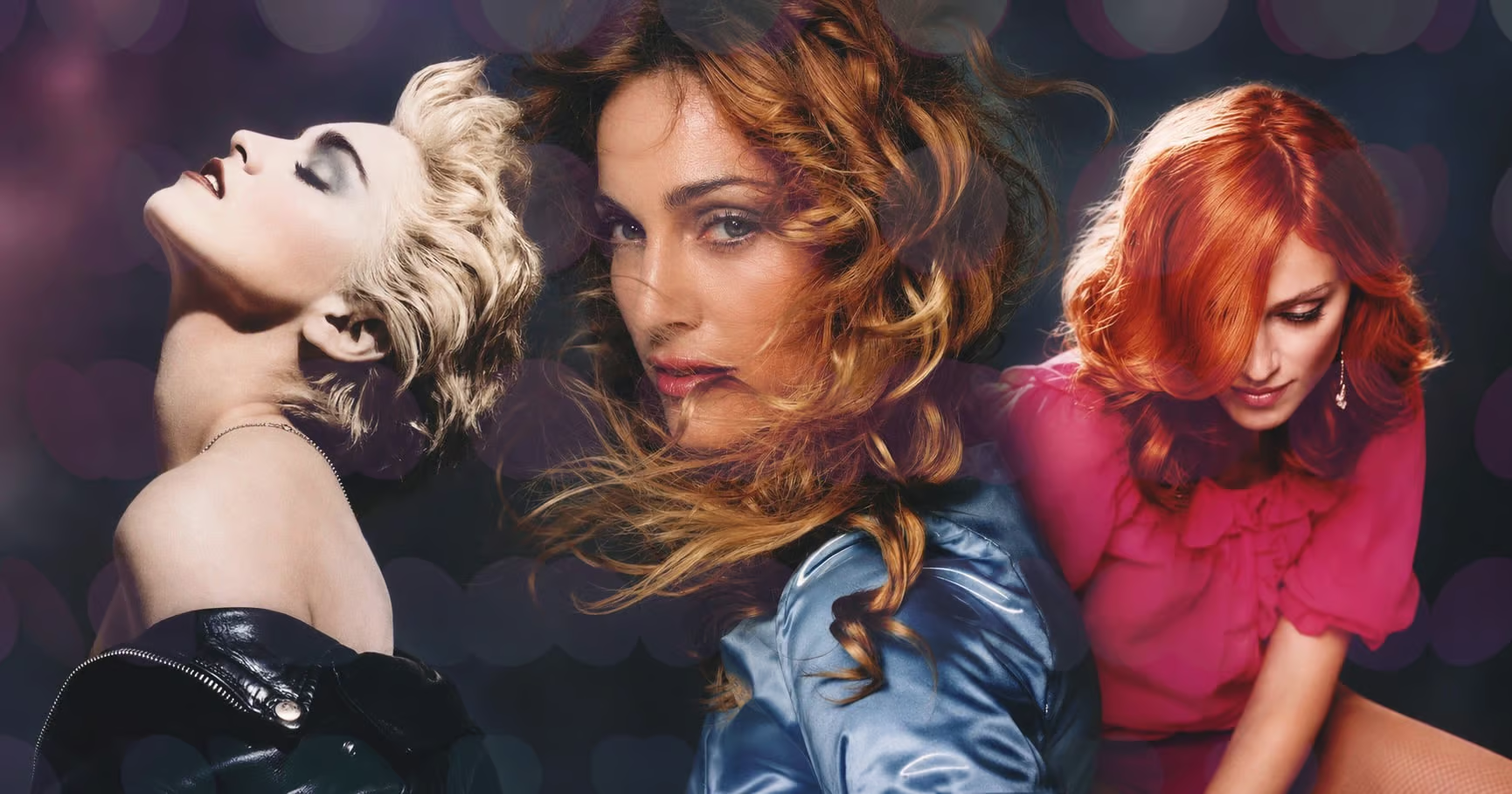
When, in 1982, Madonna first signed with the legendary Sire Records—then known for its roster of punk and new wave bands like the Ramones, Talking Heads, and the Pretenders—the deal comprised just two standalone 12-inch club singles. Even after she dropped her self-titled debut, and even after its follow-up, 1984’s Like a Virgin, became the first album by a female artist to be certified five-times platinum in the U.S., Madonna was still considered by most to be a “singles artist.” And what a singles artist she was, landing 16 consecutive Top 5 hits within the span of just five years (a record she still holds).
With 1989’s Like a Prayer, which Rolling Stone famously called “as close to art that pop music gets,” Madonna finally made her transformation into both a bona fide superstar and an albums artist. The themes got more cohesive, the deep cuts got deeper, and the reinventions became more holistic. Madonna’s ’90s albums—Erotica, Bedtime Stories, and Ray of Light—represent her creative zenith, though 2000’s Music, 2005’s Confessions on a Dance Floor, and even 2003’s much-maligned American Life pushed the boundaries of mainstream pop (something she wouldn’t do again until 2019’s Madame X).
But the hit singles kept coming for a while too. Confessions on a Dance Floor in particular produced Madonna’s biggest global hit of the 21st century, the ABBA-sampling nü-disco gem “Hung Up.” And now, over 20 years later, the singer is doing something she’s never done before: a sequel. Confessions II, Madonna’s first album in seven years, reunites her with producer Stuart Price and longtime label Warner Records. To celebrate, we took a look back at the Queen of Pop’s 43-year discography and ranked all 15 of her studio albums from worst to best. Sal Cinquemani
15. MDNA (2012)
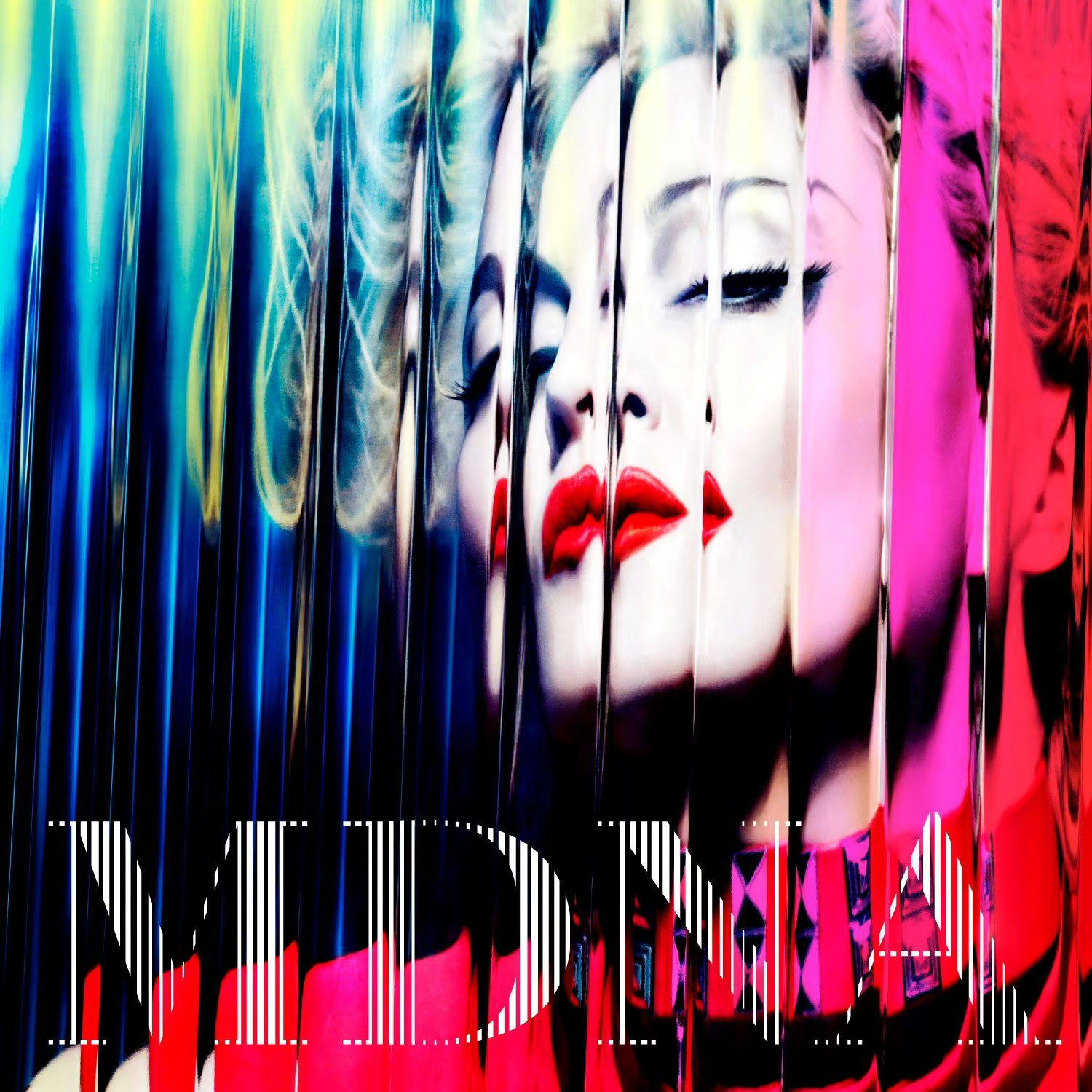
A sort of be lated break-up album, MDNA features some scathing commentary about Madonna’s much-publicized divorce from film director Guy Ritchie, including the dubstep-inflected “Gang Bang,” a campy piss take of her former hubby’s gangster fetish in which the singer portrays a fe
mme fatale in the vein of Beatrix Kiddo, and the poignant electro-pop ballad “Love Spent,” which features daggers like “I want yo
u to take me like you took your money.” Which puts the lyrical faux pas and defanged feminism of songs like “Girl Gone Wild” and “Some Girls” into sharp relief. For every gem—the ecstatic “I’m a Sinner,” one of several tracks that sees Madonna reunited with Ray of Light’s William Orbit—th
ere’s a dud like the surf-rock-meets-bubblegum-pop “Give Me All Your Luvin’.” The album, then, is a mixed bag that’s more likely to put you in a k-hole than get you on the dance floor.
14. Hard Candy (2008)
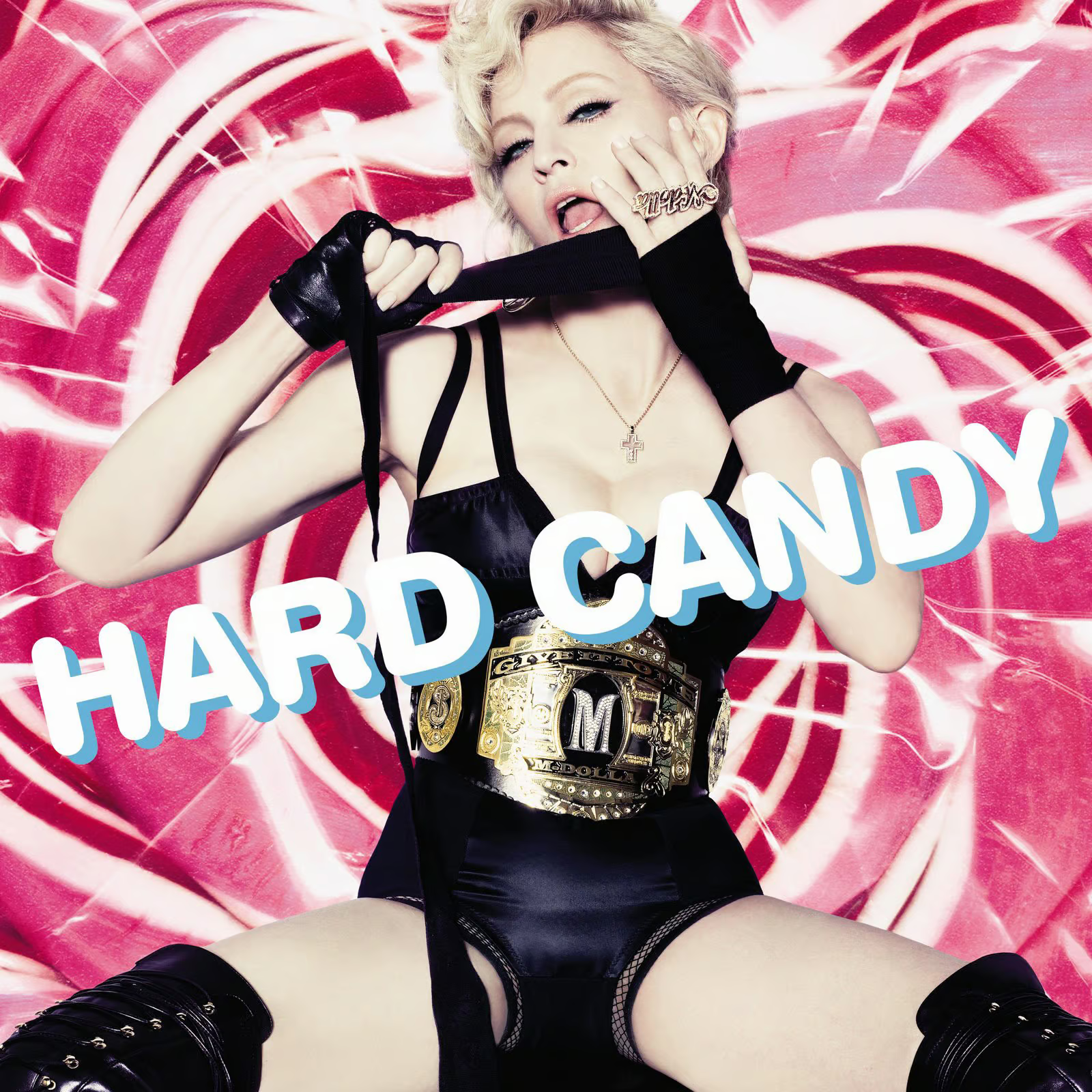
In hindsight, Madonna’s pivot toward “urban” pop may have seemed inevitable, but Hard Candy is first and foremost a dance album. Disco, of both the purist late-’70s and more covert early-’80s electro varieties, provides the album’s juicy center while hip-hop merely serves as its crunchy shell. Aside from some hints at trouble in Ashcombe House on “Miles Away” and “Devil Wouldn’t Recognize You,” though, Madonna’s follow-up to Confessions on a Dance Floor bears far less revelations. For the first time, she feels like a guest in her own home, eclipsed by super-producers Timbaland and the Neptunes’s distinctly 2000s sounds. The latter’s contributions are hit or miss, and Pharrell and Justin Timberlake make their presence known a little too often, but Timbo’s modern stamp on tracks like the hit “4 Minutes” at least renders Hard Candy more than just a throwback to Anita Ward and quaaludes.
13. Rebel Heart (2015)
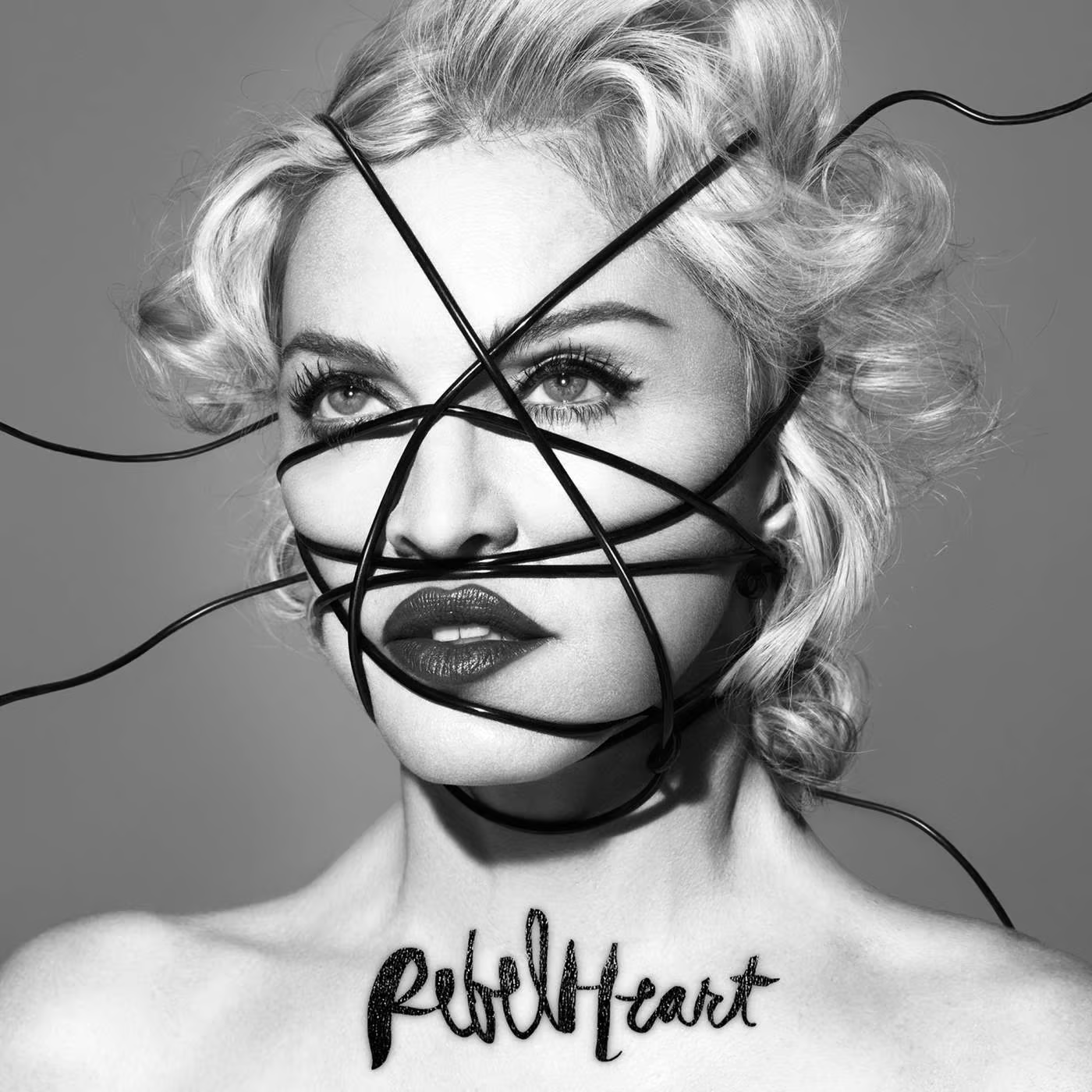
Originally planned as a double album and plagued by leaks months before its scheduled release, Rebel Heart is haunted by what might have been. Like 2012’s MDNA, there are gems to be mined here (“Devil Pray,” “Ghosttown,” “Body Shop”), but the trouble is the mining. With nearly 20 producers at the helm, the duality of the album’s title is muddied by the inclusion of garish party jams like “Bitch I’m Madonna” and sex songs like “Holy Water.” The sheer number of tracks (25 on the “super-deluxe” edition), suggesting a lack of internal editing, practically guarantees these missteps. Reminders of Madonna’s greatness abound, with samples and lyrical nods to “Vogue,” “Justify My Love,” and Truth or Dare. The pop icon has always been ironically self-referential, but here those nods seem more like tics, the side effect of an artist who’s simply said and done it all.
12. Madame X (2019)
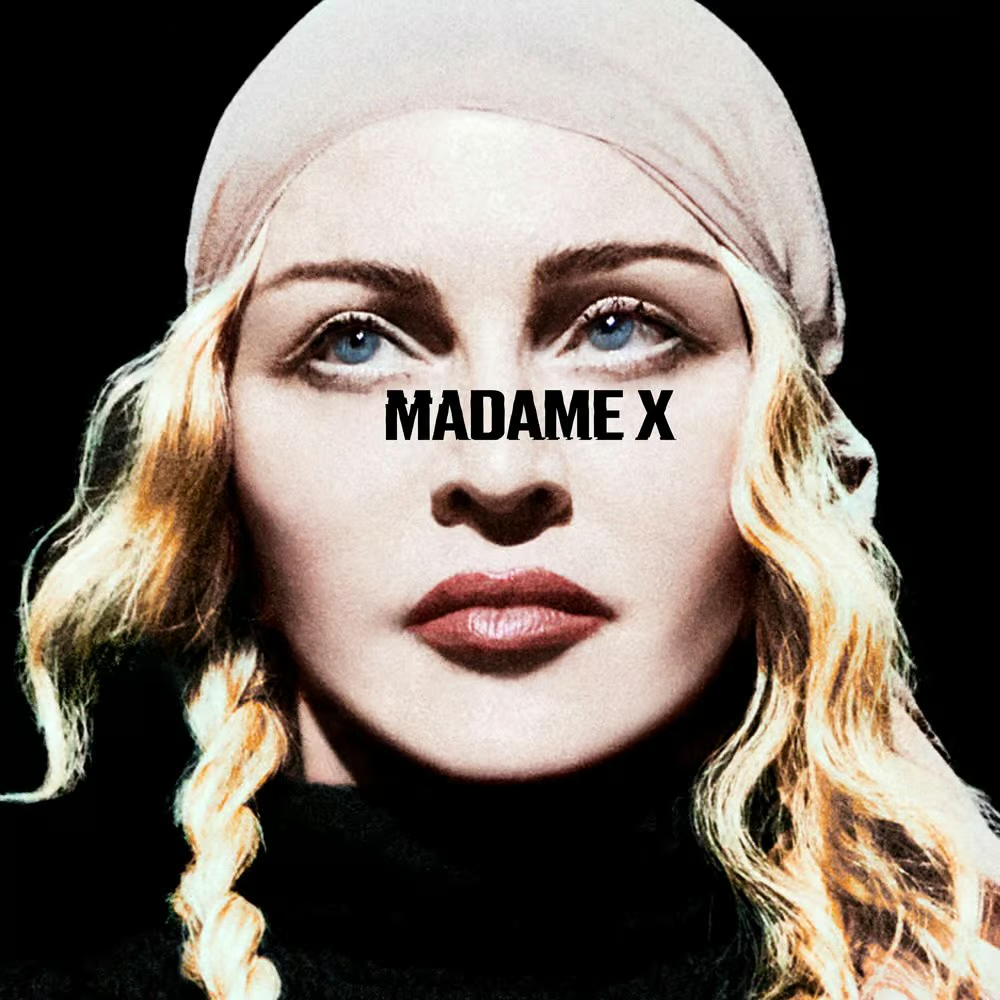
If, metaphorically, Madame X represents Madonna’s rediscovery of her voice as an artist—“I came from the Midwest/Then I went to the Far East/I tried to discover my own identity,” she sings on “Extreme Occident”—it also highlights the literal loss of it. Over the years, the soft edges of Madonna’s voice have grown sharper, and the album’s pervasive vocal effects have a distancing effect. On “Medéllin,” for example, her admission that “For once, I didn’t have to hide myself” is pointlessly cloaked in Auto-Tune, keeping us at a remove. When she isn’t singing with what sounds like a mouthful of gumballs on “Crave,” however, the rawness of her voice amplifies the nakedness of her lyrics: “Ran so far to try to find the thing I lacked/And there it was inside of me.” “Dark Ballet,” a multi-part suite that shifts abruptly from electro-pop dirge to classical ballet and back again, is a Kafkaesque treatise on Madonna’s lifelong crusade against the patriarchal forces of religion, gender, and celebrity. Even when she falters, at least you know you’re getting the real deal and not some version of a pop icon cooked up in a songwriting lab.
11. Like a Virgin (1984)
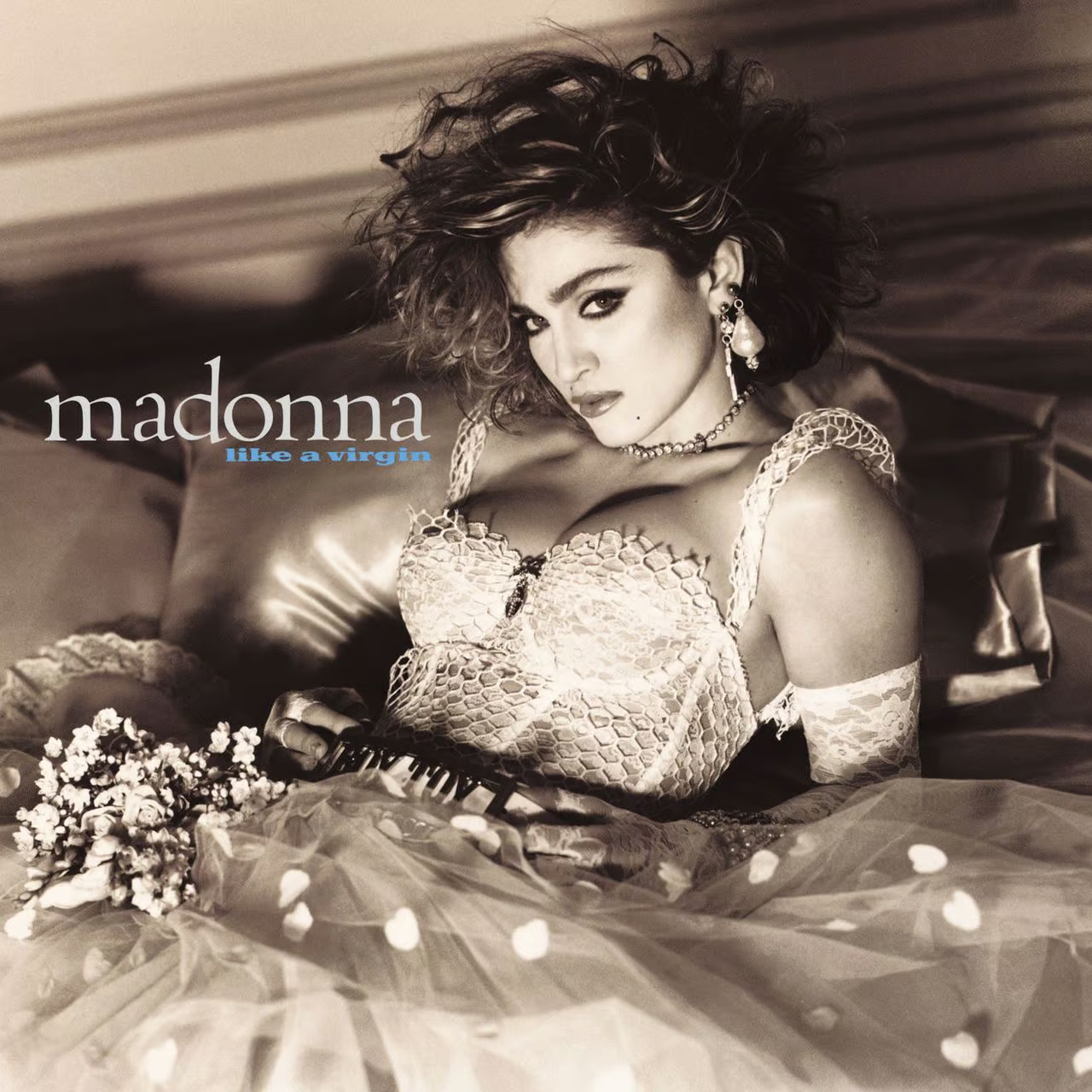
Madonna was apparently itching so badly to release her sophomore effort that she rolled her eyes when a reporter informed her that “Borderline,” from her self-titled debut, was still racing up the charts in the U.K. The title track from her new album was further delayed so that yet another track from Madonna, “Lucky Star,” could run its course in the States. Talk about first-world problems. But while Like a Virgin wasn’t as innovative as “The First Album” (as it was known overseas), it’s not hard to hear why Madonna was so eager to move on from that record’s post-disco dance-pop: Like a Virgin’s “Material Girl” and “Dress You Up” stand among the most definitive pop artifacts from the indulgent Reagan era, but the self-penned Motown throwback “Shoo-Bee-Doo” and a soul-bearing cover of Rose Royce’s “Love Don’t Live Here Anymore” proved Madonna could churn out more than just zeitgeisty novelty hits or, as she once put it, music for aerobics classes.
10. American Life (2003)
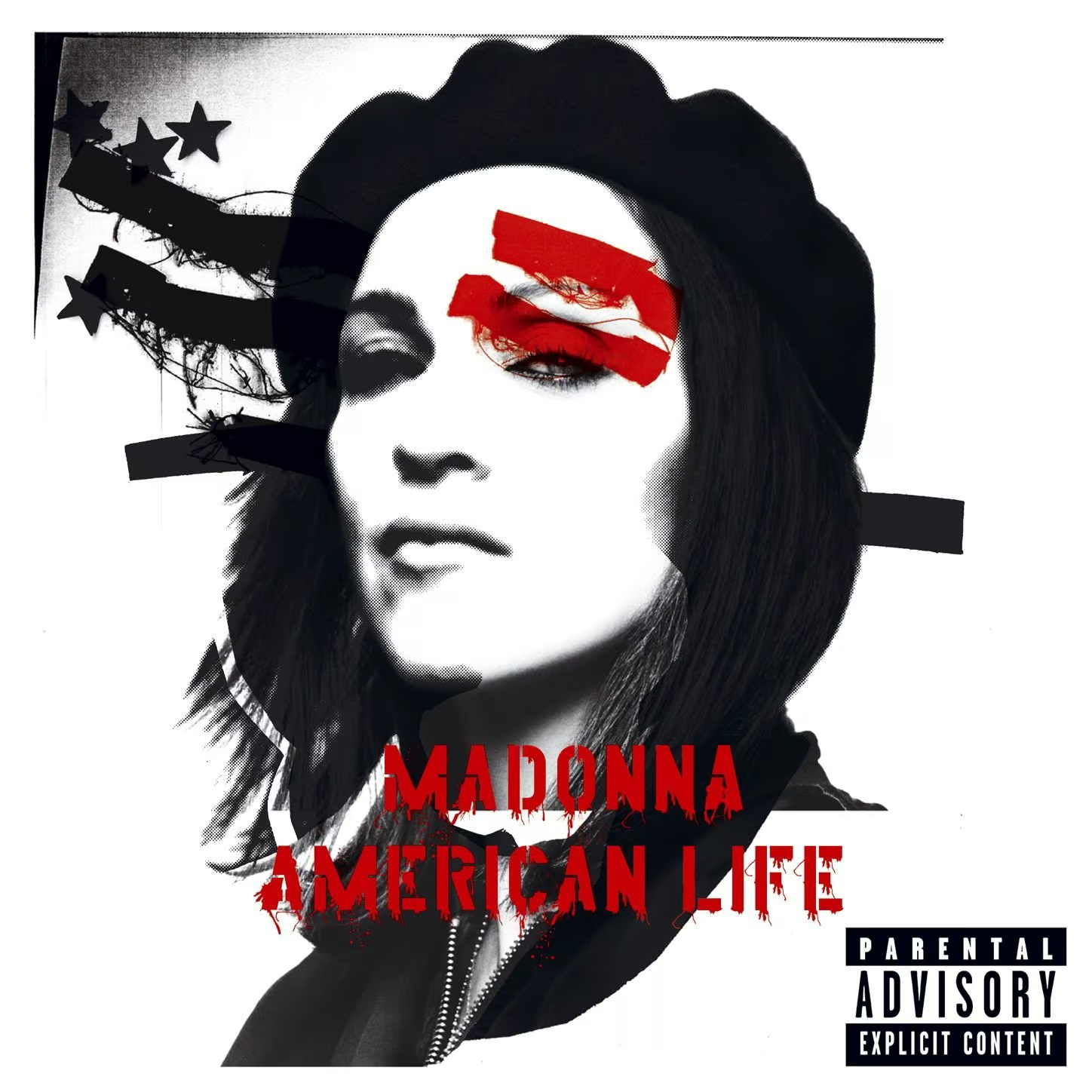
“Music stations always play the same songs/I’m bored with the concept of right and wrong,” Madonna sings on “Hollywood” before instructing her audience to “flip the station, change the channel.” It’s a bold statement coming from an artist whose most recent hits were being played ad nauseam on pop radio and MTV just two years earlier. Produced by French techno guru Mirwais, American Life boasts an ugly, lo-fi demo quality, but the album’s stripped-down, deconstructed aesthetic perfectly complements Madonna’s protest folk(tronica). Beats abruptly stop and start. Guitars stutter. String arrangements are sliced and diced. Madonna’s voice is left bare and unaffected—that is, when it’s not twisted and deformed until it sounds unrecognizable, even inhuman, like a Stepford wife on the fritz. American Life is also deeply personal—Madonna writes candidly about her relationships with her husband, children, and God—but only immediately relatable if you just so happen to be grappling with what it means to be one of the most famous people in the world. In other words, its audience is limited by design. It’s frequently self-indulgent and unpleasant, silly yet somehow humorless, but it’s also uncompromising, unapologetic, and profoundly misunderstood.
9. I’m Breathless (1990)
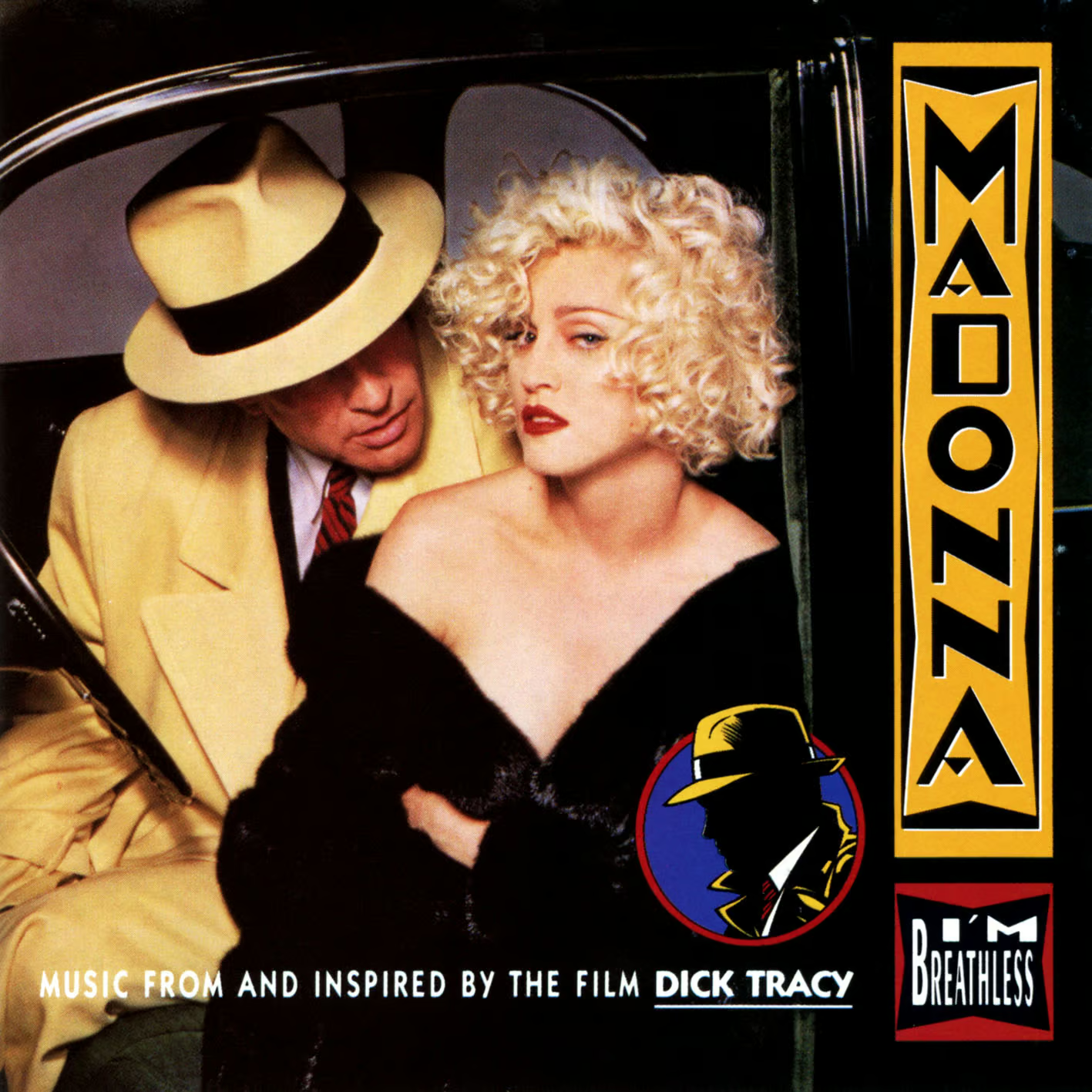
A concept album inspired by Breathless Mahoney, her character from Warren Beatty’s 1990 film Dick Tracy, I’m Breathless saw Madonna taking on swing, salsa, and Sondheim with surprising aplomb. If the ambitious melodies of the latter’s “More” stretched her vocal abilities, the tongue-in-cheek wordplay seemed tailor-made for the one-time Material Girl. From sultry (the Oscar-winning “Sooner or Later”) to puerile (“Cry Baby,” the set’s sole stinker), Madonna displays a remarkable range throughout, and she holds her own alongside Mandy Patinkin (“What Can You Lose”). The cheeky “Hanky Panky” and “Something to Remember,” a meditation on self-love, touch on themes she would go on to explore more explicitly later in the ’90s, while the jazzy “Now I’m Following You,” a duet with Beatty, segues into a dance remix that includes a Socrates quote (“An unexamined life is not worth living”) that, in typical Madonna fashion, she twists to fit our postmodern world. Even as the perennial debate over whether I’m Breathless is a soundtrack or a studio album persists, one thing is clear: It’s a Madonna album.
8. Madonna (1983)
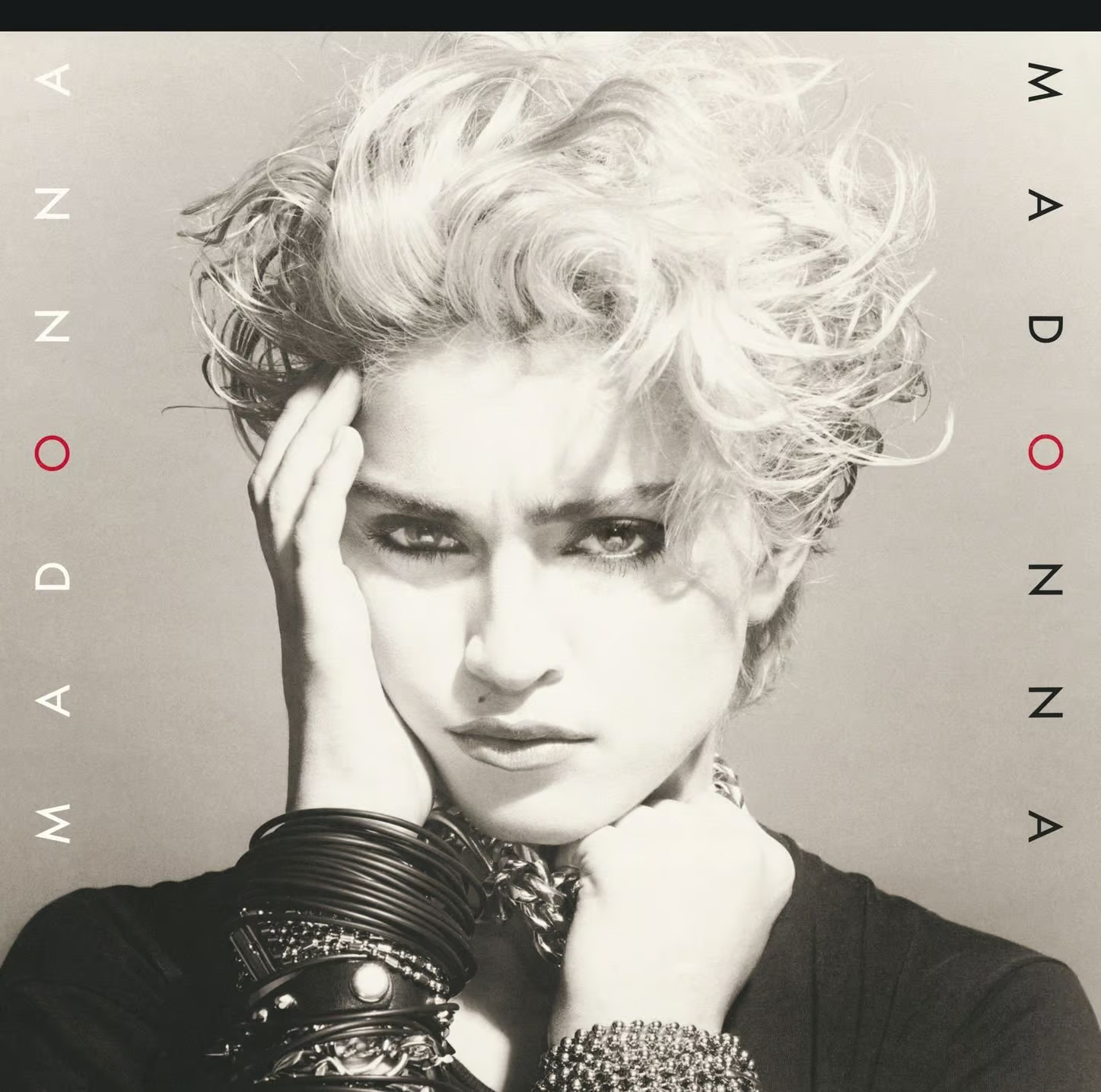
Few would deny that Madonna went on to pursue deeper goals than the simple pop perfection of her self-titled debut. But any album that yields a “Holiday” and a “Lucky Star,” both released as singles in the span of two consecutive days (albeit an ocean apart), is still pretty untouchable. Wistful and eager to please, Madonna’s sparkling ditties aren’t so much “post-disco” as they are “disco ain’t going nowhere, so shut up and dance,” hand-in-glove with the efforts of Larry Levan, Jellybean Benitez (Madge’s boyfriend at the time), and Danceteria (where she worked as a coat check girl and an elevator operator prior to signing a record deal). Like a heavenly body atop the surging underground currents of every synth-heavy dance subgenre that preceded her, Madonna’s cultural co-opting is nothing if not fervent.
7. True Blue (1986)
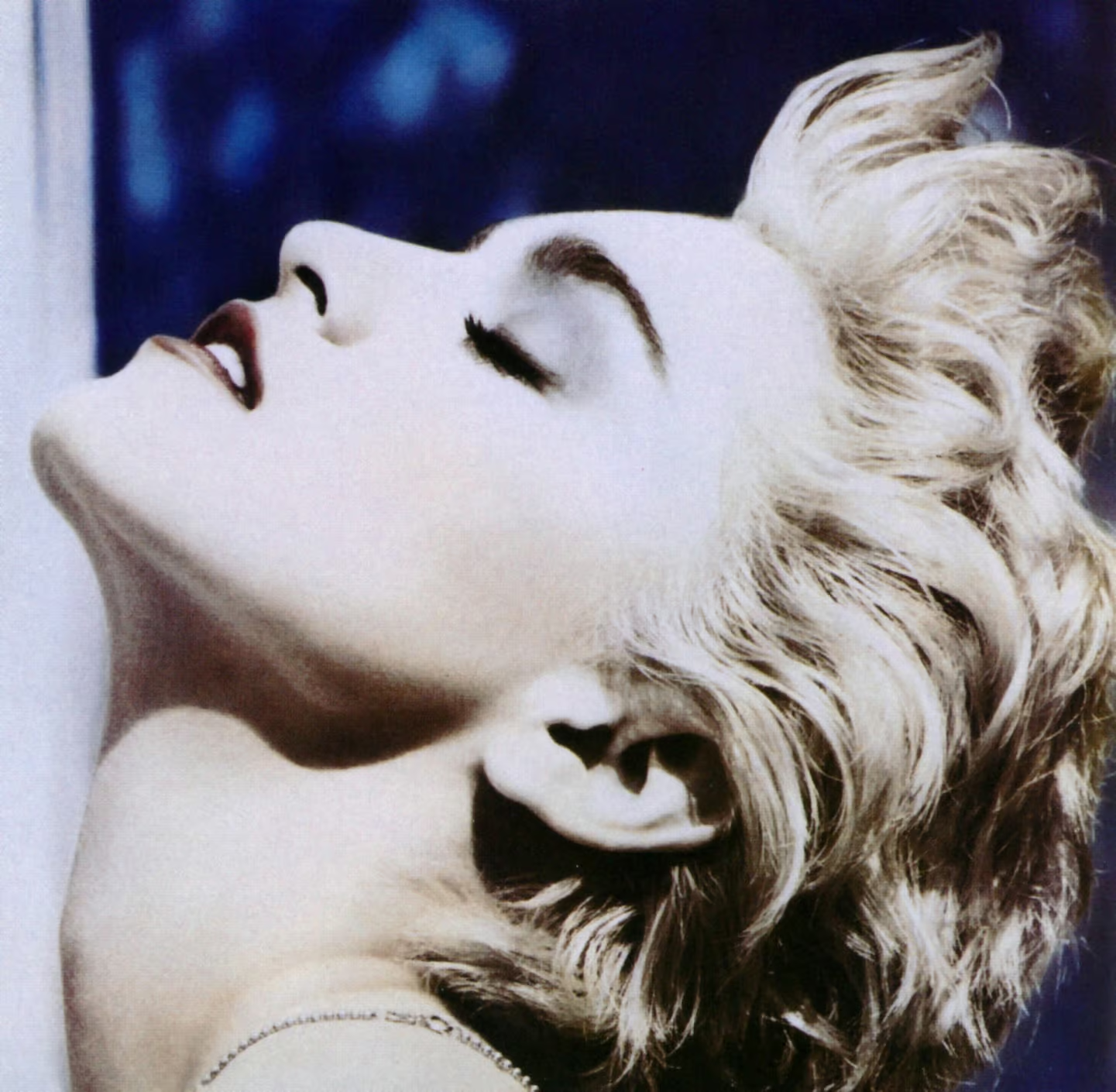
Sure, some of the production choices on True Blue sound chintzy and dated in comparison to those on Madonna’s other ’80s releases, but there’s no getting around the fact that five of the album’s nine tracks are among the strongest individual singles of her career. And a couple of the deep cuts—“Where’s the Party” and “White Heat,” which samples the 1949 gangster film of the same name—could have been hits had there been more time. More importantly, True Blue was the album on which it became readily apparent that Madonna was more than just a flash-in-the-pan pop star. It’s when she began manipulating her image—and her audience—with a real sense of clarity and purpose and made sure she had quality songs to back up her calculation and world-dominating ambition.
6. Confessions on a Dance Floor (2005)
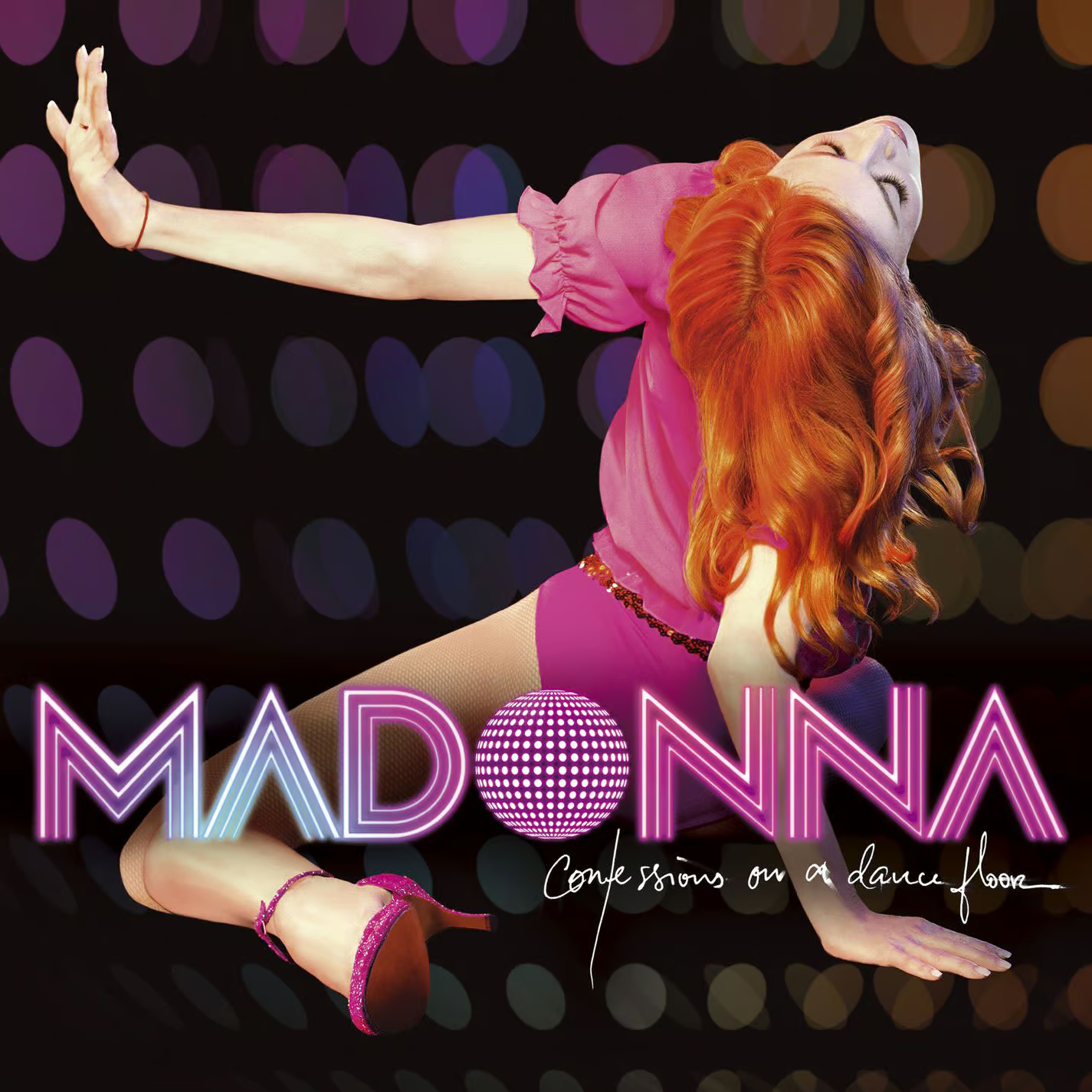
Confessions on a Dance Floor could’ve just as easily been called Ghost of Madonnas Past: At once a thumping tribute to the restorative power of dance music (this was the workout album of the decade if there was one) and a treatise on the singer’s own fame (“I spent my whole life wanting to be talked about”), in which all her musical tics headily come to fore (singing in foreign languages? Check. Faux-tribalistic hymn? Check.). References to the past are everywhere, from the ABBA sample of “Hung Up” to her silly love letter to the city where she got her start, “I Love New York,” but Madonna has always been a thoroughly postmodern pop artist, and as such, songs like “Hung Up,” Sorry,” and “Forbidden Love” aren’t so much throwbacks as updates of the disco sound to which she’s indebted.
5. Music (2000)
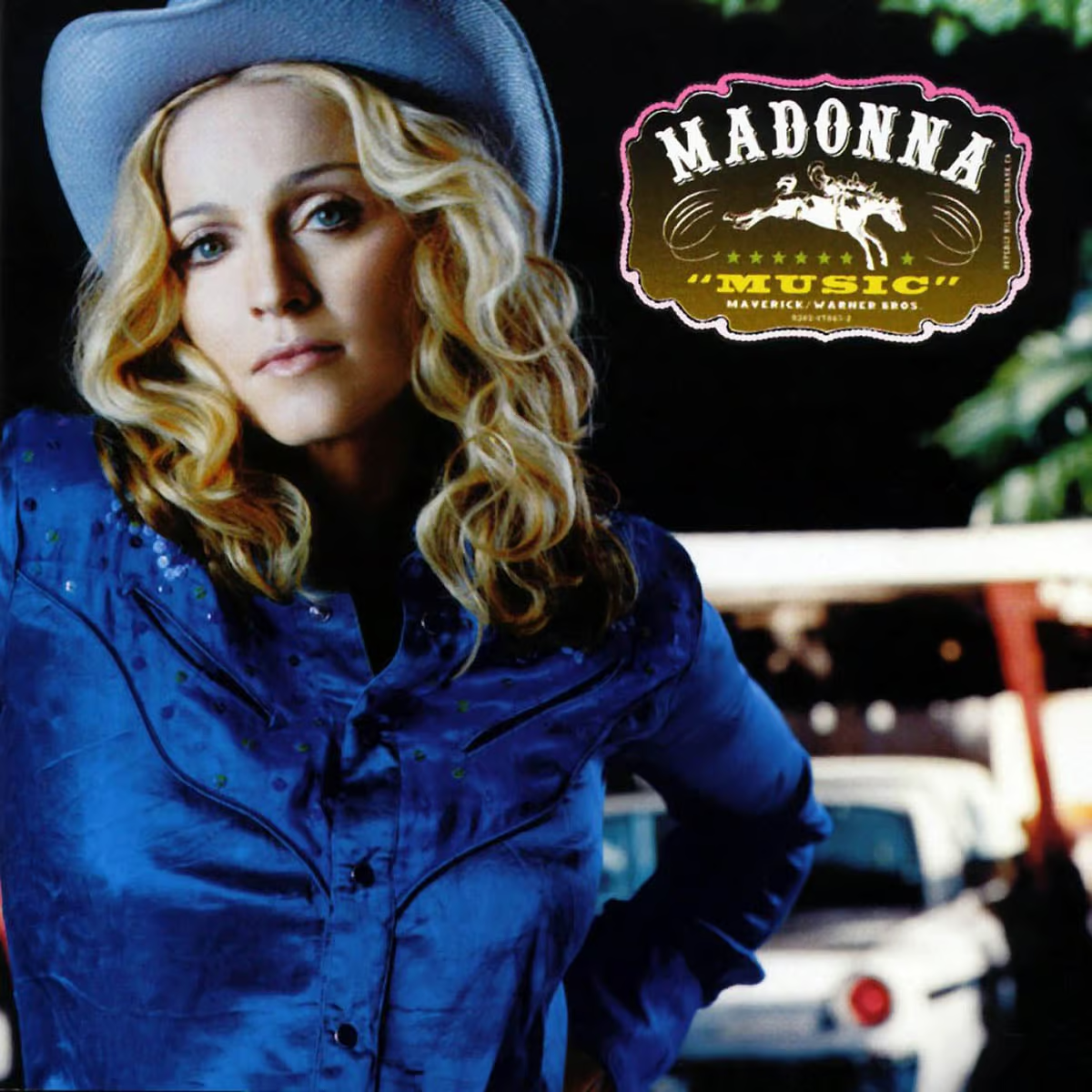
Though Madonna would collaborate with William Orbit on three tracks on her follow-up to Ray of Light, the album otherwise represented a seismic shift from its predecessor’s warm-and-gooey spirituality. Mirwais’s defiantly experimental, Eurotrashy, wholly artificial production—awash in Auto-Tune and Nintendo beats—was a jarring contrast to the previous album’s sleek Y2K electronica. But no one does ersatz like Madonna, and fittingly, the plainly titled Music is also one of her most soul-bearing album, from the feminist “What It Feels Like for a Girl,” to the Toni Morrison-alluding “Paradise (Not for Me), to the heavily Auto-Tuned “Nobody’s Perfect,” a slow burn that’s never less than affecting.
4. Bedtime Stories (1994)
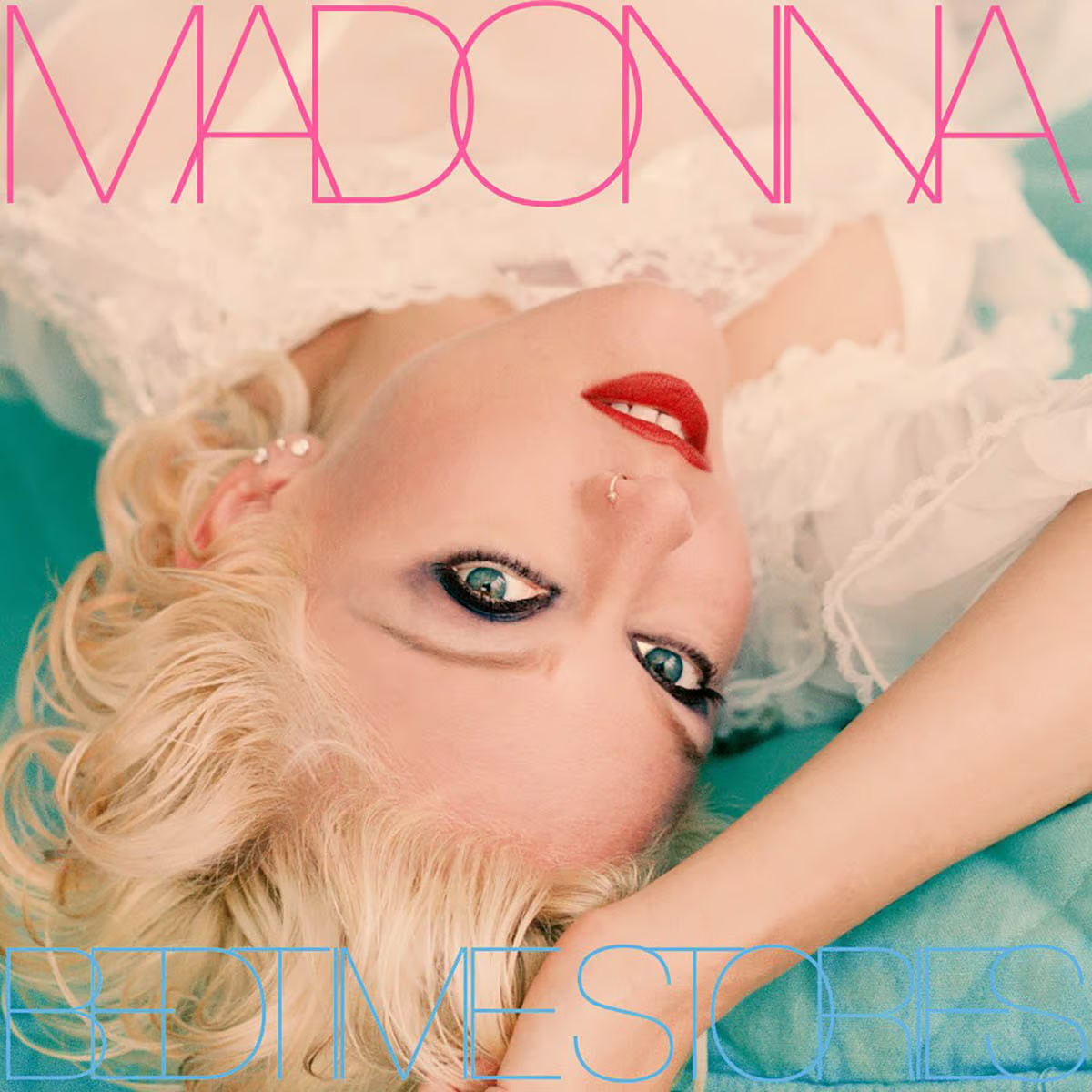
Over the years, Madonna has cited influences as disparate as the classical composers who soundtracked her early dance training and, despite Kurt Cobain’s assertion that she “ignored” them, the punk bands from her days as a drummer in the East Village, but R&B had the most audible impact on her music during the first 15 years of her career. So to view Bedtime Stories as anything other than an extension of what she’d been doing all along would be remiss. And instead of simply following American trends of the time, Madge infused the album with the edgier trip-hop sounds that were happening on the other side of the pond. But it was her refined literary taste, from Proust to Whitman, and both the media and the public’s rejection of her sexual politicking that truly informed the singer’s seventh album. Whether licking her wounds over lovers (“Take a Bow”) or critics (“Human Nature”), Madonna never sounded more emotionally vulnerable or more cerebrally plugged in than she does here.
3. Like a Prayer (1989)
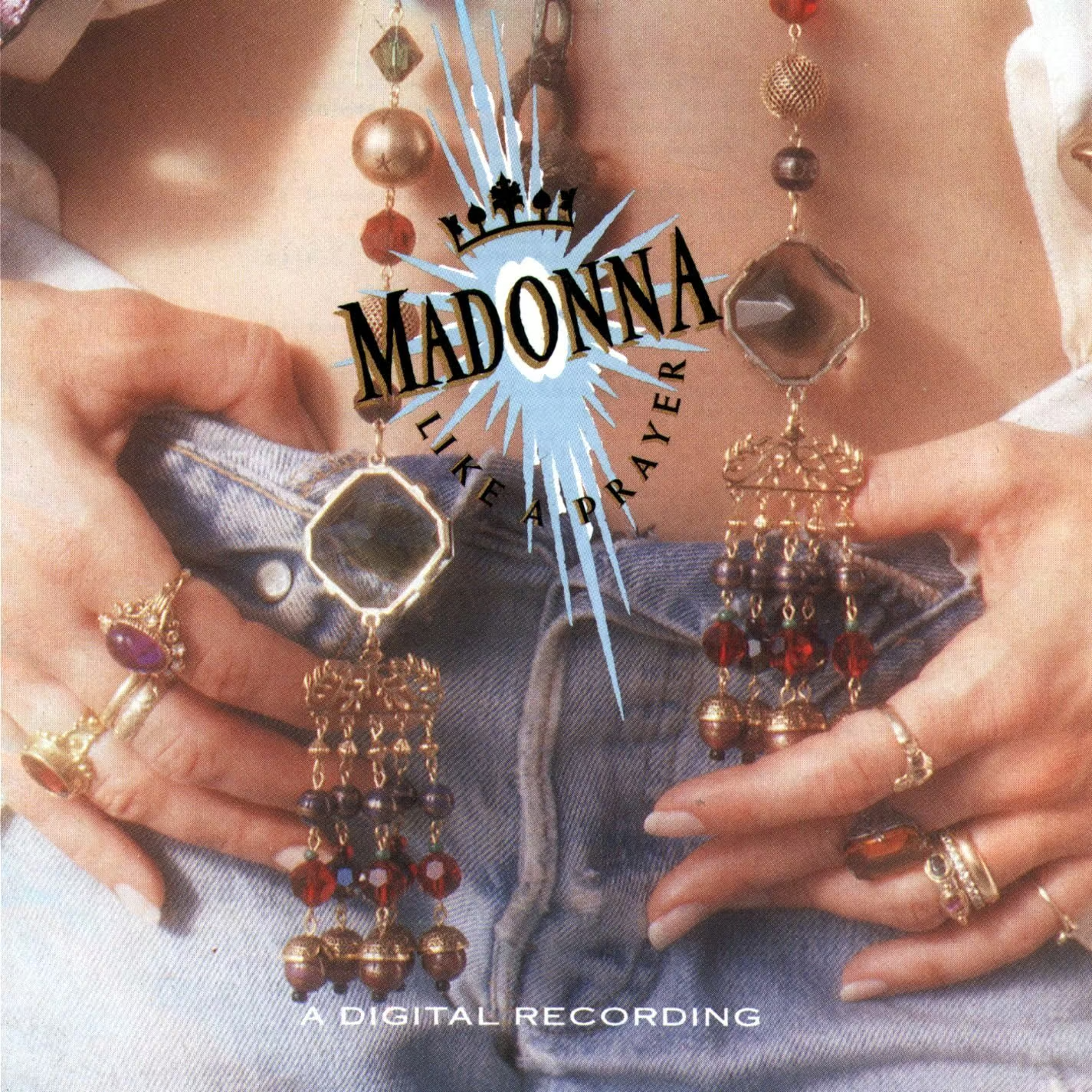
For her fourth album, Madonna went back to her roots. Like a Prayer is decidedly retro, the ultimate genre pastiche of all of singer’s early influences: Sly Stone, the Staple Sisters, the Association, the Beatles. More significantly, it found the singer reflecting on marriage and family, subject matter that bonds her musical influences together into a cohesive—and confessional—whole. Madonna sings with more feeling than many of her more technically gifted peers, and with her voice left shockingly unpolished here, the album offers some of her most soulful, vulnerable performances, from the wrenching “Oh Father,” about her relationship with her dad in the wake of her mother’s death, to “Till Death Do Us Part,” about her volatile marriage to Sean Penn. The album begins with a slamming door—the closing of a chapter, if you will, and the beginning of a new one. By the late ’80s, Madonna was already one of the biggest pop stars of all time, but with Like a Prayer, she became one of the most important.
2. Erotica (1992)
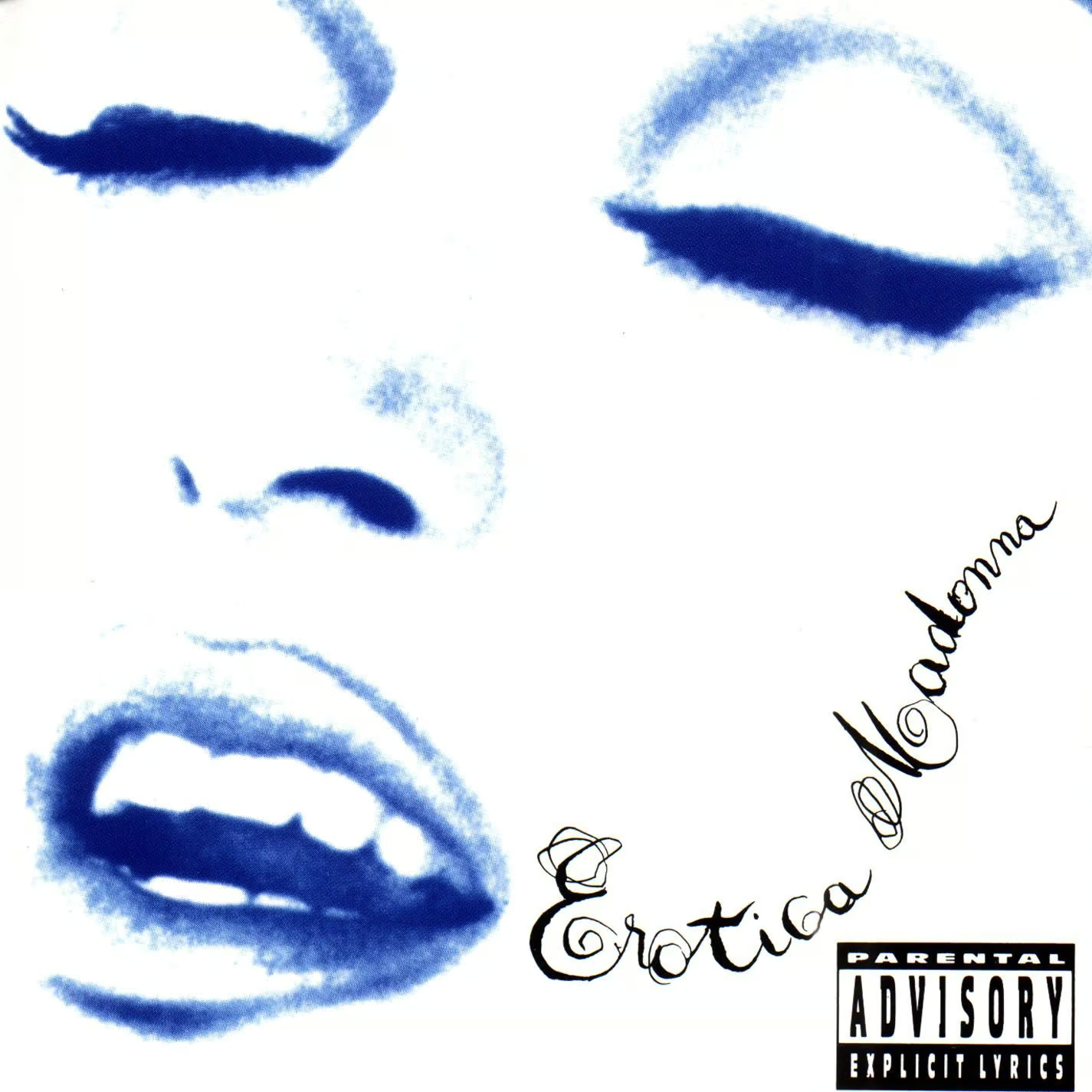
Madonna’s self-absorption pays off in the most titillating manner on Erotica, with a sub-dom dichotomy coexisting in the form of a solitary protagonist pretty much throughout the 75-minute, magnum-sized album. “You’ll do it, you’ll take it, you’ll screw it, you’ll fake it,” she taunts on “Thief of Hearts.” “You fucked it up,” she snarls in the outro to “Bye Bye Baby.” “I’ll hit you like a truck,” she promises on “Erotica.” Is there any doubt that the “you” is Madonna’s own inner saboteur? Given first-person embodiment in the stark, hopeless “Bad Girl,” the utter mutability of Erotica’s point of view blurs the line from start to finish—with “In This Life,” an earnest tribute to two of Madonna’s closest friends who died of AIDS, being the major exception. Her awareness of the boundaries being crossed, and the mixed aftermath that sexual fulfillment can often bring, is exactly why Erotica remains her most immediate and most daring effort, one which snuffs out afterglow and imprints itself like a rash on the soul.
1. Ray of Light (1998)
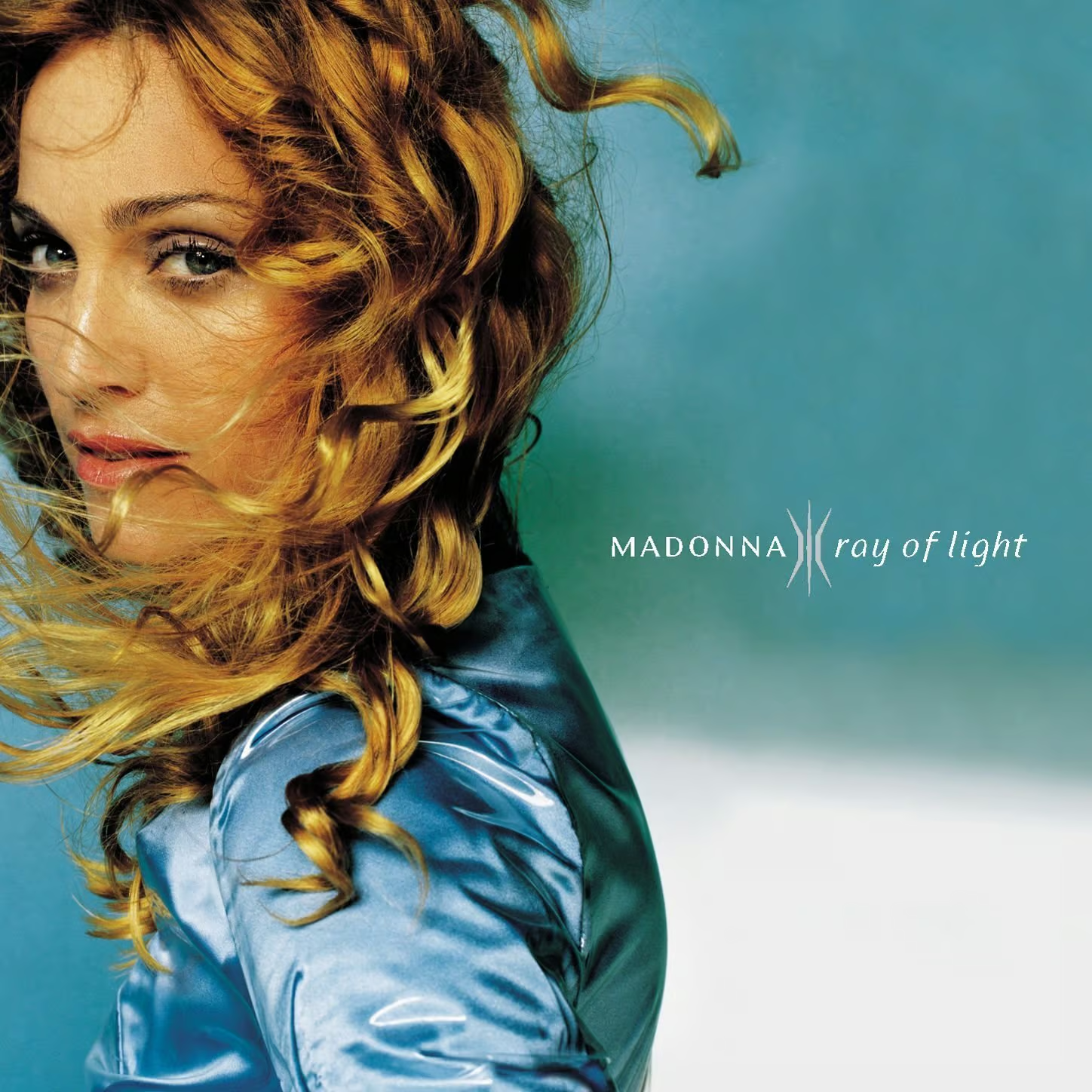
Don’t call it a comeback. Because while Madonna’s immediately preceding genres of choice (R&B, adult contemporary, Broadway) were quickly rendering her relevance a thing to be admired only in the past tense, her chart prowess was still in fine form. No, Ray of Light was a rebirth, with Madonna flinging herself like a whirling dervish into a genre whose commercial prospects, especially in the U.S., were uncertain at best. From “Drowned World/Substitute for Love” to “Frozen” to “Mer Girl,” water is a recurring theme, serving as a symbol of purification throughout. Madonna’s lyrics are notably devoid of any trace of cynicism here, and though it’s tempting to interpret her “answers” as obvious or absolute, it’s her sense of wonder and searching—and, of course, Patrick Leonard’s gorgeous melodies and William Orbit’s immaculate yet playful production—that elevates Ray of Light above mere new age hogwash and, in fact, propelled her career forward into the 21st century.