

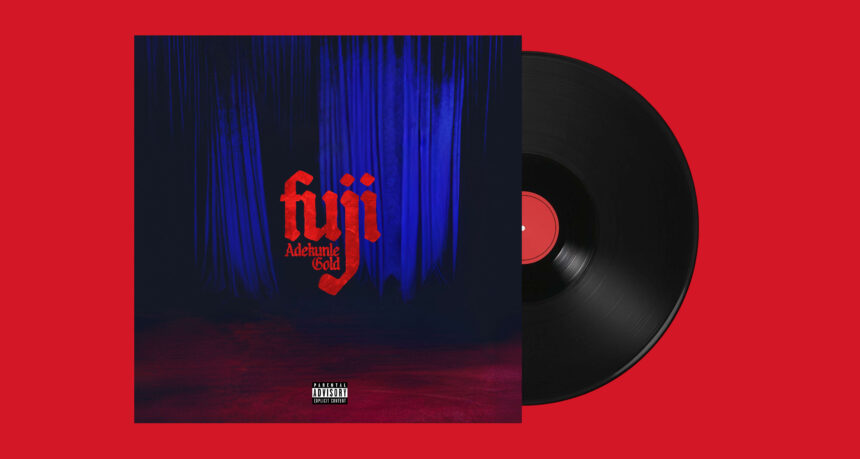
Adekunle Gold has long established himself as one of African music’s most versatile figures—an artist who thrives on evolution. At every stage of his career, he has resisted creative stagnation, constantly reinventing himself through sonic shifts, aesthetic rebranding, and a restless pursuit of new frontiers. His discography, from Gold to About 30, Afro Pop Vol. 1, Catch Me If You Can, Tequila Ever After, and now Fuji, reads like a gallery of distinct eras, each with its own identity and sonic signature.
Fuji is largely praised as a cultural masterclass, blending traditional Yoruba sounds (like sakara and Fuji elements) with modern Afrobeats, R&B, and pop for a rich, evolving sound that celebrates his heritage, though some critics note it’s more inspired by Fuji than a pure Fuji record, focusing on his artistic growth, family, and Nigerian experience rather than deep genre immersion. Reviews highlight its cohesive storytelling, flawless production, and emotional depth, calling it a significant evolution and potentially his best work since Afropop Vol. 1, though it might not satisfy fans seeking his old folk sound.
Across social media, fans and critics alike have described it as both a masterstroke and a brave risk. On X (formerly Twitter), some called it “quite catchy and well produced, though a few songs are lacking in lyrical depth,” while others hailed it as Adekunle Gold’s best work since Catch Me If You Can. With all that in mind, here is a track-by-track deep dive into Fuji.
Track-by-Track Breakdown
- “Big Fish”
The album opens with purpose. Big Fish begins with a sample from the iconic LEFTY SALAMI BALOGUN AND THE SAKARA GROUP, this instantly roots the listener in heritage. Adekunle Gold then tells his story of survival and triumph, reflecting on his rise from humble beginnings to fame. It is boastful but grounded in gratitude. The percussions breathe of Yoruba spirituality, and the song feels like both a prayer and an announcement. As openers go, it sets the stage powerfully.
- “Don Corleone”
On Don Corleone, Adekunle channels confidence and control. The mafioso reference is a metaphor for his evolution and dominance in the music game. Backing vocals, belonging to our ever-beautiful Simi (his wife), add lushness to the rhythm. The production glows, though lyrically, it leans more on attitude than depth.
- “Bobo (feat. Lojay & Shoday)”
A clear standout. Bobo is rhythmic, modern, and irresistibly catchy. Lojay and Shoday bring freshness and balance, creating a dynamic contrast that elevates the track. It is equal parts street anthem and luxury talk. One fan on X wrote, “The more I listen, the more I realize this Fuji album no get skip.” The synergy on this track makes that sentiment hard to argue with.
- “Coco Money”
Short but sharp. Coco Money is a slick commentary on the power of wealth. The track’s brevity is both its charm and flaw; it ends just when it feels like it could explode into something bigger. Still, its quotable lyrics have quickly become social media captions. It is one of the most replayed snippets on TikTok already.
- “Believe”
A sample of the legendary Bill Withers and Grover Washington Jr. classic “Just the Two of Us,” Believe slows the tempo and delivers heartfelt honesty. Adekunle sings of trust, devotion, and emotional resilience. The song’s simplicity makes it memorable. Its vulnerability gives the project breathing room amid the confidence-heavy early run.
- “My Love Is The Same”
This song feels like a letter. Introduced by a light exchange between him and his daughter, it’s a reaffirmation that fame and time have not diluted love. His voice carries warmth and sincerity, making it one of the most soulful moments on record.
- “Love Is An Action (feat. 6lack)”
A standout for international appeal. With 6lack’s smooth vocals blending effortlessly, the track argues that love must be shown, not merely said. The blend of R&B and Afropop gives it crossover potential. Adekunle holds his own alongside the American singer, proving yet again his global reach.
- “Many People”
Here, Adekunle reflects on growth, evolution, and his current status in comparison to where he started. Sampling the legend, Yinka Ayefele, the song’s rhythm draws from Tungba and Fuji percussion, offering one of the more sonically traditional moments while being drenched in nostalgia.
- “Only God Can Save Me (feat. Davido)”
One of the most talked-about collaborations on Fuji. Adekunle and Davido trade reflections about struggle, temptations they face as married men in the industry. The chemistry is genuine as these two are no strangers to each other, and the Amapiano groove underneath keeps it accessible. Some expected a louder banger, but what we got instead was introspection wrapped in melody. It’s a collaboration that feels mature and necessary.
- “ I’m Not Done (feat. Robert Glasper)”
Here, Adekunle closes one chapter while keeping the door open for evolution. With Glasper’s jazzy piano chords, the song feels like a late-night reflection. It’s calm and introspective. It provides direction and reassures fans that this is not an endpoint but another beginning.
Serving as a bonus track and emotional closer, Obimo brings warmth and tenderness. Adekunle sings in Igbo, calling it a song for love itself. It ties the project together beautifully, showing that even as he explores Fuji and Yoruba influences, his heart beats for unity and feeling.
Key Themes & Reception:
- Cultural Depth: Reviews highlight its deep dive into Yoruba culture, heritage, and Lagosian experiences, using the Fuji genre name symbolically for broader meaning (“Finding Uncharted Journeys Inside”).
- Evolution & Reinvention: It marks AG’s growth, moving from his folksy beginnings to a more global sound while staying rooted, described as a “masterclass in evolution”.
- Fusion Sound: The album successfully blends traditional elements (sakara, Yoruba music) with contemporary Afrobeats, Soul, and R&B, creating a polished, intentional sound.
- Critical Acclaim: Many call it a “no-skip project,” his best work since Afropop Vol. 1, or a magnum opus, though some note lyrical variations or question if it’s enough Fuji.
- Storytelling: The album features coherent, emotional narratives, exploring themes of heritage, fatherhood, grief, and self-belief.
What Critics Are Saying:
- Positive: “A cultural masterclass,” “unbroken emotional and sonic narrative,” “a statement”.
- Debate: Some critics debate if the title fully translates to the sound, with opinions ranging from “genius” to “forcing a new idea”.
- Impact: It’s seen as a bold move, reaffirming indigenous sound’s power globally and marking a significant point in AG’s career.
Final Thoughts
Fuji is not entirely a pure Fuji record, and that’s precisely its brilliance. It’s a hybrid, an experiment in blending tradition with modernity. Adekunle Gold continues to prove that he’s not afraid of change. Afrobeats’ global visibility is at an all-time high right now and this project is sure to further propagate its roots and strengthen culture.
Some fans wanted more raw Fuji textures, but few can deny the craftsmanship, emotional weight, and sonic sophistication of this body of work.
Lots of criticism have been made about this project not representing “Fuji” as it’s primarily known in western Nigeria, but true listeners know that Fuji in itself is a fusion of several sounds and elements into one genre and AG Baby has just made a perfection of that in this album. Furthermore, the interpolation and sampling of songs by Fuji greats like Ayefele, Obesere, Kwam 1, and others is a clear indication of the fact that he really did his homework on this one.
And to say that this wasn’t Fuji oriented at all is a great disservice to the level of Fuji influence this album has, with its heavy percussion, call and response, and the very conscious application of western culture through its language use.
This album was nothing short of a masterpiece, and a very important part of the history of Afrobeats. In my opinion, I would say it’s a definite classic in the coming years.
The production, track cohesion, intentionality, and proper feature allocation make this album a strong contender for Album of the Year.