
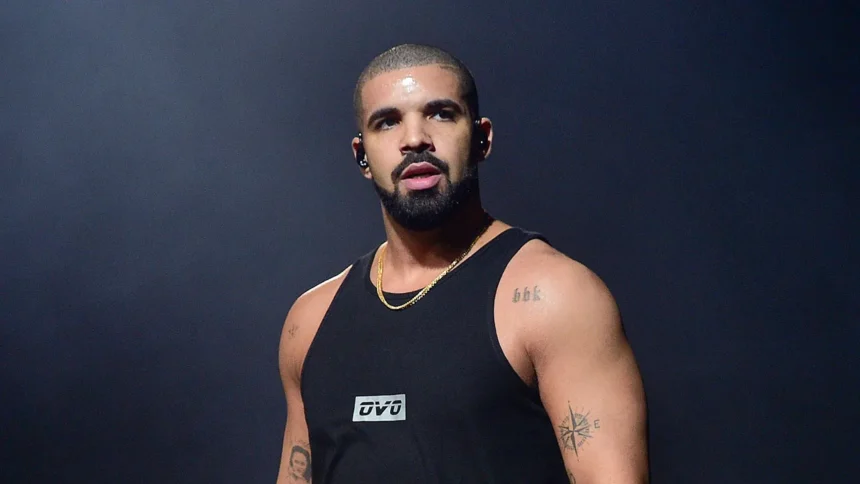
According to a recent complaint, the rapper colluded with streamer Adin Ross and an Australian citizen to promote illicit gambling on Stake.us and transfer money to bot farms.
Drake has been charged with taking part in a racketeering scheme centered on the online casino Stake. Drake, who is compensated to promote the site, is allegedly participating in Stake’s unlawful gambling operation in the United States, according to a class action lawsuit filed in Virginia this week. Additionally, it claims that he is using Stake’s unregulated “tipping” mechanism to transfer money to a third party in Australia so that they can invest in bot farms that unlawfully increase Drake’s streaming stats. Along with Drake, streamer Adin Ross, and accused Australian co-conspirator George Nguyen, Stake’s parent business, Sweepstakes Ltd., is named as a defendant.
The case is based on the fact that Stake operates in U.S. states where real-money online gambling is prohibited, such Virginia. Stake sells “play money” that comes with free tokens in order to get over the online gambling ban, perhaps exploiting a very controversial legal loophole. The tokens can be wagered and subsequently turned into cash for withdrawal, however the play money has no value. Even though their local communities allow internet gambling, Drake and Ross may be held accountable for endorsing Stake.us if a judge finds the practice to be unlawful.
Stake is a multibillion-dollar corporation that was founded in Australia in 2017 and saw its riches soar amid the cryptocurrency bubble. Drake has since participated in numerous livestreams of online gambling sessions and giveaways as part of the $100 million annual sponsorship contract it inked with him in 2022. Drake appeared to have a falling out with the platform in August of last year when withdrawal requests were denied. When he uploaded a video in October showing his finding that a $1 million sum had been returned to his account, the issue seemed to be settled.
The lawsuit’s bot-farming component also targets Stake’s “tipping” tool, which lets customers move money between accounts and is a standard feature of online casinos. Drake, Ross, and Nguyen allegedly utilized the tool to secretly transfer gaming winnings, according to the lawsuit. The lawsuit further claims that Nguyen’s continued marketing of Stake and a campaign to “fabricate popularity; disparage competitors and music label executives; [and] distort recommendation algorithms” were funded by that “wholly unregulated money transmitter.” According to the lawsuit, this technique “has suppressed authentic artists and narrowed consumers’ access to legitimate content” and is implemented on platforms like Spotify.
On behalf of individuals impacted in Virginia, two plaintiffs, LaShawnna Ridley and Tiffany Hines, filed the class-action lawsuit, alleging that Drake’s advertising enticed them to join Stake. Based on two infractions of the Virginia Consumer Protection Act and one of the Racketeer Influenced and Corrupt Organizations (RICO) Act, they are requesting damages of at least $5 million. This is not the first case that implicates Drake or even the first that claims the platform is violating US gambling laws: Drake and Ross allegedly advertised Stake.us as a harmless “social casino” rather than an illicit gambling website in a Missouri complaint that was filed in October. According to the lawsuit, Drake and Ross deceived their fans even more by doing gambling livestreams that were paid for by Stake rather than by their own money.