
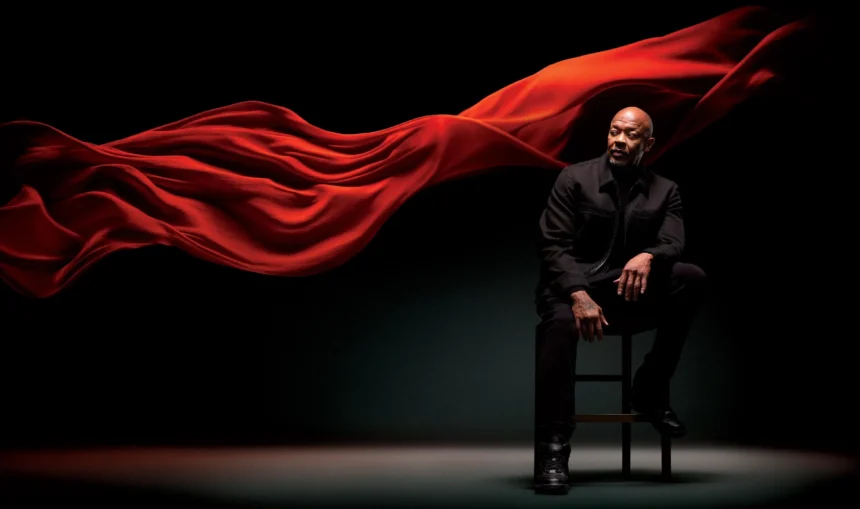
He escaped the gang violence of Los Angeles to become a pioneering hip-hop artist and producer, then sold Beats Electronics to Apple to $3 billion. Here’s what Dr. Dre is doing next—and how he’s enjoying success.
Late on a Thursday night in the spring of 2014, actor Tyrese Gibson went live on Facebook with Dr. Dre to celebrate the sale of the company Dre cofounded, beats electronics, to apple for $3.2 billion.
“The Forbes list just changed,” Gibson said, after what he admits was a few too many Heinekens. “It came out like two weeks ago—they need to update the Forbes list!”
“In a big way. Understand that,” Dre can be seen saying behind him. “The first billionaire in hip-hop, right here from the West Coast.”
The only problem was that at that point the deal hadn’t closed, and the leak led to immediate panic that it might spoil the final negotiations. “That’s not one of my proudest moments,” Dre admits now, sitting in his palatial home in the affluent Brentwood neighborhood of Los Angeles. After shaving a reported $200 million off the price, Apple finalized its acquisition of the headphone maker a few weeks later, netting Dre more than $500 million in cash and nearly $100 million in stock, according to Forbes estimates. While it wasn’t enough to get the legendary hip-hop producer onto the Billionaires list that year, it formed the bulk of a fortune that, more than a decade later, Forbes now estimates at $1 billion.
Sitting at the kitchen table in his 36,000-square-foot mansion, worth an estimated $53 million, the 61-year-old Dre—born Andre Romelle Young—never forgets how far he’s come from his childhood in Compton, California, where he grew up with a teenage mother and an abusive father during the height of Los Angeles’ gang violence and crack cocaine epidemics. “I had no problem going to cut grass just to buy shoes when I was younger,” he says of his childhood. “I would do what I had to do just to get what I wanted.” Despite his wealth, he swears that nothing in his career has been motivated by money and instead credits his success to an obsession with creating perfect products, whether it’s music, headphones or his latest venture, a gin brand.
“I don’t chase money—I try to make the money chase me,” says Dre, who ranks No. 20 on our list of the Greatest Self-Made Americans. “I’ve always been able to bet on myself, and whatever I do and wherever I go, I know I have my talent with me.”
That talent first came to light in the 1980s, when, as a teenager, he performed as a DJ wearing satin scrubs and a surgical mask at a club in Compton called Eve After Dark. Teaching himself to cut and produce music in his garage using instruments from a local pawn shop, he would go on to cofound the pioneering gangsta rap group N.W.A (alongside Ice Cube, Eazy-E and Arabian Prince) and become, arguably, the greatest producer in hip-hop history. N.W.A’s story became the basis for the 2015 Hollywood blockbuster Straight Outta Compton, and in 2022 he became the first hip-hop artist to headline the Super Bowl halftime show, using the moment to highlight the numerous artists whose careers he helped launch—including Snoop Dogg, Eminem, 50 Cent and Kendrick Lamar.
The money he has earned has afforded him the ultimate freedom, Dre says, especially after his divorce in 2021 from Nicole Young, his wife of nearly 25 years. He can fill his time now doing whatever he wants. Some of it he spends relaxing, of course, but more often he’s chasing after the next big thing, whether it’s his gin brand—named Still G.I.N., after his 1999 hit “Still D.R.E.”—or the nearly 400 unreleased tracks he says he created during the pandemic and has been tinkering with ever since. Given a few spare moments, he sits in his spacious living room beneath a wall of statues that include Grammys, Emmys and a Hollywood Walk of Fame star and plays a few bars at his Bösendorfer grand piano (which starts at around $200,000), surrounded by a half-dozen legal pads covered in musical notes and song ideas.
“Who knows if something is gonna happen to make me come up with the best thing I’ve ever done in my life?” he says. “The exciting part is there’s the potential of that. It’s exciting and depressing at the same time because I know it’s there, and what if I don’t find it?”
hose who have spent time working with Dre, whether in the studio, at Beats or on another venture, know his process can be painstaking and that he doesn’t stop tinkering until he feels a project is good enough to release.
“Time doesn’t exist with Dr. Dre,” says frequent collaborator Eminem via email. “He isn’t focused on dates or deadlines or when something should come out—he’s only thinking about whether something is ready. For instance, on [Dre’s] 2001 album, I thought it was ready before he got ‘Still D.R.E.’ [recorded]. And then I realized if Dre thought he was done, the world would have never heard it.”
Sometimes the world never does. After working on his highly anticipated album Detox for more than a decade, Dre scrapped the project entirely in 2015, reinforcing his reputation as a perfectionist.
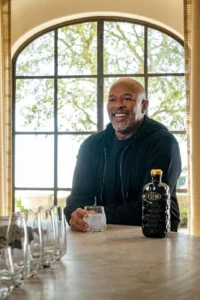
“Perfectionist is sometimes just a word I use to buy time,” he says. “If I have a release date and the song isn’t right, am I supposed to turn it in? No, I’ll take the proper time until it’s right.”
He has exhibited that trait since his breakthrough song in 1987, “Boyz-n-the-Hood,” in which he coached inexperienced rapper Eazy-E through hours and dozens of takes on vocals. The hit song, with lyrics written by Ice Cube, another local rapper, formed the basis for N.W.A—short for Niggaz Wit Attitudes. They ushered in the gangsta rap genre with 1988’s Straight Outta Compton, which went double platinum despite the fact that many television and radio stations refused to play its explicit lyrics. Dre was a producer on all the tracks but later claimed in a 1996 interview that he received just 2% royalties from his N.W.A albums.
“When I was younger, I didn’t realize how much ownership I had, because I was just doing my thing,” Dre says now. “I didn’t understand exactly what my talent meant or how powerful it was.”
He left the group in 1991 to cofound Death Row Records with infamous music executive Marion “Suge” Knight, where his “G-Funk” (for gangsta-funk) became the signature sound of West Coast hip-hop. Dre’s debut solo album, The Chronic, sold more than 3 million units in 1993 and earned him his first of seven Grammy Awards, while his work as a producer on albums including Snoop Dogg’s quadruple-platinum debut, Doggystyle, and Tupac Shakur’s double-platinum single “California Love” cemented the genre as a mainstream commercial force. By 1996, Death Row was reportedly bringing in more than $100 million per year in revenue.
Dre left Death Row that same year, forfeiting a valuable ownership stake in order to separate himself from the violence within the label and the increasingly heated East Coast–West Coast rap rivalry, which led to Shakur’s murder that fall. He set up his own company, Aftermath Entertainment, as a subsidiary of Jimmy Iovine’s Interscope Records, but initially struggled to capture the same magic.
“His label was really cold,” says Iovine, who signed Shakur, Lady Gaga, No Doubt and other Grammy-winning artists to it. “He needed to be inspired, and one of the problems he has is he gets inspired rarely. He has to wait for the perfect wave.”
That wave came in the form of a skinny white kid from Detroit named Marshall Mathers. Dre first heard his demo tape after an Interscope intern passed it to Iovine, and on their first day in the studio together they cut the single “My Name Is,” which introduced the world to then-26-year-old Eminem in 1999. The rapper would become the top-selling musical artist of the 2000s, according to Nielsen SoundScan, with 32.2 million albums sold in the U.S. alone.
“Dre took a chance on me at a time when no one else would,” Eminem, now 53, tells Forbes. “He gave me the credibility for people to listen long enough to take me seriously.”
Aftermath took off from there with hits like Eminem’s “The Real Slim Shady” and 50 Cent’s “In Da Club,” plus Dre’s second solo album, 2001, which sold more than 6 million copies. He first appeared on Forbes’ highest-earning celebrities list in 2001, when he reportedly sold 30% of his stake in Aftermath to Interscope for $35 million.
Opportunities to boost his earnings always glimmered, with many brands hoping to get him to endorse them. He remembers seeing Iovine walking down the beach in 2006 in Malibu, where they both owned houses. Dre invited Iovine up to his deck, where he asked him whether he should consider launching a shoe line. “I just looked at him and said, ‘Man, what do you got to do with sneakers?’ ” the 73-year-old Iovine recalls.
“Fuck sneakers,” Dre remembers him saying. “Let’s do speakers.”
The two became partners in Beats Electronics, manufacturing premium over-the-ear headphones at a time when the most popular style was the cheap earbuds that came free with the purchase of iPods and iPhones. Dre brought his same meticulous attention to product testing as he did to his music, honing a bass-boosting audio mix that he believed delivered a superior listening experience. Combined with Iovine’s marketing savvy, the brand took off immediately. Beats headphones were featured in the music videos of Interscope artists and on the heads of Team USA’s basketball team during the 2008 Olympics—an effort led by LeBron James, who was given a small piece of Beats equity to become an ambassador. Soon Beats by Dre became more than an audio accessory—they were a status symbol, similar to Nike’s Jordan brand revolution. The company grew from $180 million in sales in 2009 to $860 million in 2012, according to Forbes estimates.
Beats expanded beyond hardware in 2012, acquiring music streaming service MOG for an estimated $14 million. Dre and Iovine used the infrastructure to launch Beats Music in 2014, aiming to be a streaming competitor to Spotify and Pandora and, ultimately, a better acquisition target. Given how much his estimated 20% stake was potentially worth, Dre laughs at the idea that he would ever hesitate to sell. “That was easy,” he says. “That was, like, the best thing ever.”
Apple’s eventual $3 billion purchase of Beats is still the largest acquisition in the company’s history. Part of the logic behind the estimated $100 million each in stock for Dre and Iovine—and its four-year vesting schedule—was to bring them into the executive team that transitioned Beats Music into Apple Music in 2015.
Dre left Apple in 2018, and it was revealed in court documents during his divorce in 2021 that he had sold most of his stock (it has since doubled in value). He settled the divorce with two $50 million payouts, and soon after began shopping his recording and publishing catalog. In January 2023, he sold the rights to Universal Music Group and L.A.-based media investment firm Shamrock Capital for more than $200 million, according to Forbes estimates.
Looking for a new challenge, it was Iovine who once again supplied the idea. Talking with Dre and Snoop Dogg one day in the studio, he asked why they had never tried to turn their 1994 hit “Gin and Juice” into a physical product. “Gin is a lane of alcohol that doesn’t really do well,” Snoop tells Forbes, “so we chose a lane that doesn’t do well, so we can excel.” Adds Iovine: “Dre said, ‘We could kill that,’ and so did Snoop. And then the march to quality started.”
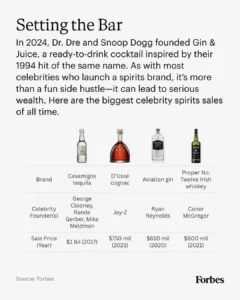
Dre toured a distillery in Chicago, where he learned how gin is made, and sampled 17 different brands to determine the exact qualities he wanted. With Snoop and Iovine as investors, they partnered with Patrick Halbert and Andrew Gill, entrepreneurs who had just sold their own ready-to-drink (RTD) cocktail brand, On the Rocks, to Jim Beam. In February 2024, the Gin & Juice canned cocktail debuted in 30,000 retail stores globally.
And while RTD cocktails have exploded over the past decade—the global market hit an estimated $3.8 billion (sales) last year—a successful premium spirits brand can be far more lucrative. Just ask actor Ryan Reynolds, who sold his Aviation Gin brand for $610 million in 2020. “Gin & Juice is fun,” Gill says. “But Still G.I.N. is serious.”
Iovine warned the duo they might never produce a gin that Dre would like enough to replace Hendrick’s, his go-to brand for decades. But much like Beats with its bass amplification, they homed in on citrus and spice to balance out the juniper flavors found in most old-school gin brands. After 15 iterations, they presented the first sample bottle to Dre at his house. He was immediately sold, and greenlit the drink for release in late 2024. This February, Applebee’s announced it was adding the spirit to the menu in its 1,500 restaurants nationwide.
“I feel like I still have a lot of gas in the tank,” Dre says of the spirits venture and others he’s working on. “I just want to wake up and be motivated to do something.”
Most mornings, Dre descends to the lower level of his home and swims a mile—88 lengths of the 60-foot pool. From there he might head to his basement studio to make music or to his personal theater, returning downstairs to lift weights most afternoons in his full-size gym.
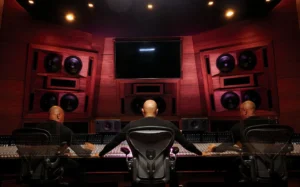
None of these rooms existed when Dre first purchased the mansion from Tom Brady and Gisele Bündchen in 2014. It was already a $40 million property, but he says he spent more than three years doubling the square footage, building out the perfect recording studio beneath one end of the house, converting Brady’s garage gym into the theater on the other and tearing out the driveway between them to put in the underground pool and gym. “I don’t get attached to material things at all,” he says. “This is the first thing I’ve ever purchased that I’m proud of.”
Like one of his records, Dre has renovated and refined the house until it feels just right. Now he rarely leaves the home, which sits high above Los Angeles, leading him to sell off several of his other properties, including the Malibu beach house where Beats was born, for a reported $16.5 million. “I have no reason to leave,” he says of the Brentwood estate, to which he occasionally invites musicians to jam or friends to smoke cigars by the backyard pool. More often, he spends his days there alone. But unlike Charles Foster Kane, he’s found peace at his Xanadu.
“Right now I’m really enjoying my solitude,” he says. “I’m just trying to simplify my life, and the only thing I want to do is maintain my way of living here at my house. I want my house to run exactly the way it’s running now, because that’s what makes me happy.”
Still, he can’t stop himself from seeing the possibility of creating more. Glancing out the back windows of his kitchen toward the pristine lawn and sweeping views of the Pacific Ocean, he figures there could be another 4,000 square feet of potential floor space underneath, if only he can figure out what he would want to build there.
“I know there’s something I can do with it, underground,” Dre says of this latest unfinished masterpiece. “The idea of that, knowing I could do that and the discovery, like, oh, imagine me figuring out what I can do under there. Isn’t that a fun way to think?”